
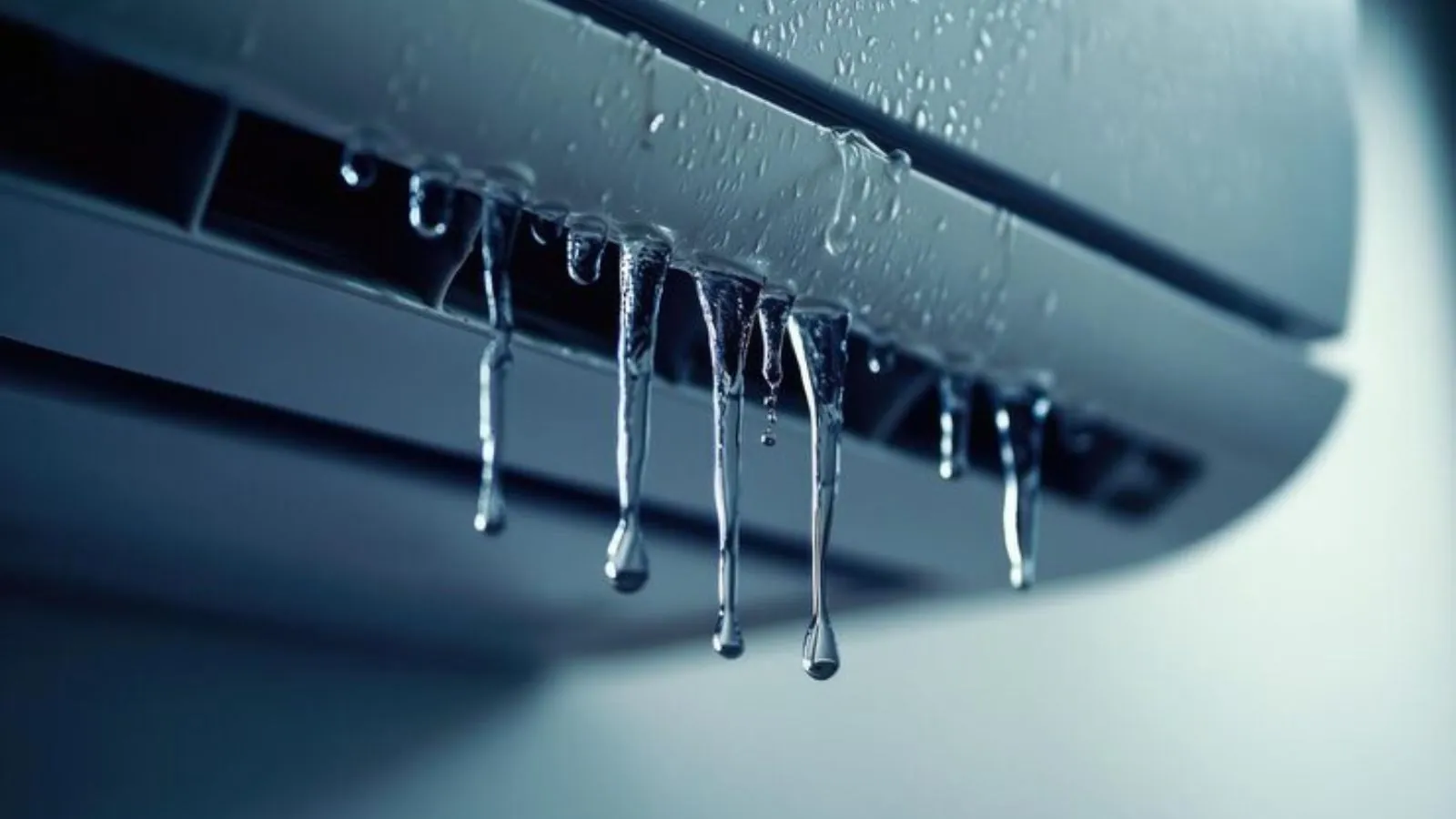
An AC leak water damage problem usually starts with a clogged condensate drain, and it can wet a ceiling, a closet floor or a wall long before anyone sees it. If you see water at the air handler, turn the system off at the thermostat, set a pan or towels under the leak and call us. Our 24/7 line at (630) 580-6401 is open, and same-day response is available when crews are free.
Air conditioners pull a lot of water out of humid summer air. A cooling coil can condense several gallons on a hot, humid day, and it all has to go somewhere. When the drain line, the pan or the float switch fails, that water goes into your building instead.
How an AC unit ends up leaking
A clogged condensate drain
Algae and debris plug the line, and the pan overflows. This is the most common cause.
A cracked or rusted drain pan
Older pans corrode, and a small crack lets water onto what is below.
A frozen evaporator coil
Low airflow or low refrigerant ices the coil, and the melt overwhelms the drain.
A failed float switch
The safety switch that should shut the system off when the pan fills does not work.
Poorly sealed ducts
Cold ducts sweat in warm attics and drip onto the ceiling below.
Where AC water shows up in West Chicago homes
The air handler can be in an attic, a closet, a basement or a crawl space. Attic units drip into the ceiling. Basement and closet units soak the floor and the bottom of the wall. Because the leak is slow, drywall, insulation and framing can stay damp for weeks.
Slow leaks that go unseen are the ones that turn into mold, so a musty smell near the air handler is worth acting on. Read mold remediation if growth is already visible.
What cleanup involves
Shut it down
We confirm the system is off so it stops making water while we work.
Find the wet area
Meters and thermal imaging show where the water traveled, especially above a ceiling.
Remove and dry
Wet insulation and drywall are removed if they cannot be dried. See ceiling water damage repair.
Dry and verify
Air movers and dehumidifiers run until readings are dry, using structural drying methods.
Prevention that actually works
- Have the condensate drain flushed at the start of each cooling season.
- Replace air filters on schedule so the coil does not ice.
- Check that a float switch is installed and tested.
- Look at the drain pan during the first hot week of summer.
- Do not ignore water stains below an attic air handler.
AC leak or something else?
A water stain under an AC unit may not be from the AC. A roof leak, a plumbing line or a bathroom above can look the same. We use moisture meters to trace the source before saying which it is.
If the stain is on a ceiling and you are not sure, our ceiling page explains the other common sources. If a humidifier, water heater or washer is nearby, our appliance leak page may be a better fit.
Safety steps before help arrives
- Unplug the appliance only if the outlet and floor are dry, or shut off its water valve.
- Do not run the appliance again until it is checked.
- Mop up pooled water so it does not reach other rooms.
- Photograph the area, then call (630) 580-6401.
For ac leak water damage, our water categories, drying goals and documentation follow ANSI/IICRC S500, the published standard for professional water damage restoration.
What drives the cost of AC leak cleanup
| Cost factor | Why it changes the scope |
|---|---|
| How long it leaked | A slow leak over weeks wets more material than a single overflow. |
| Where the unit sits | An attic unit often wets ceiling insulation and drywall, a basement unit wets floors. |
| Insulation and drywall | Wet insulation is usually removed and replaced. |
| Mold present | Growth adds containment and removal. |
| Drying days | Attic and closet spaces can be slow to dry. |
Many Illinois homeowners policies cover sudden water damage but not gradual leaks, so a slow condensate leak may not be covered. Read your policy or ask your agent. We explain the scope and price before work starts, and (630) 580-6401 is the number for your real figure.
Common questionsQuestions about ac leak water damage repair in West Chicago
No. An HVAC technician repairs the unit and clears the drain. We remove the water, dry the structure and document the damage.
Yes. A slow leak keeps drywall and insulation damp, which is the condition mold needs. Dry it quickly and fix the cause.
Most often the condensate drain is clogged or the pan has overflowed. Turn the system off and call an HVAC technician, then call us to dry the ceiling.
Often it is not a flood, but it can become one. If water is actively running or the ceiling is sagging, call right away. Our line is open 24/7, and same-day response is available when crews are free.
AC leak spreading?
Call (630) 580-6401 and tell us where the unit is and where you see water.