
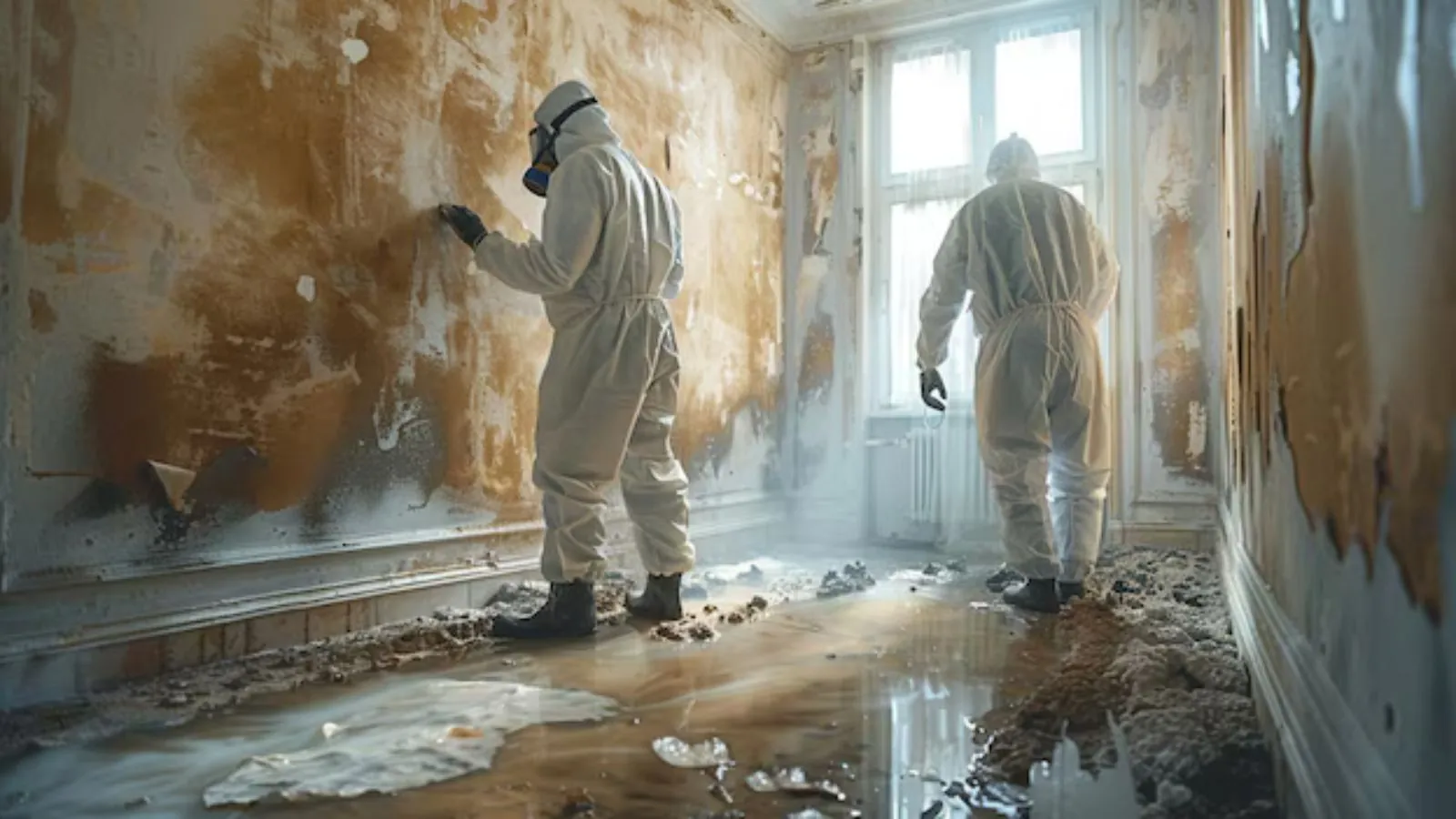
Mold remediation is the containment and removal of mold growth and the correction of the moisture that caused it. It follows water damage that was not dried fast enough or a leak that has been going on for a long time. Call us at (630) 580-6401 and same-day response is available when crews are free.
We follow the practices described in the ANSI/IICRC S520 standard for mold remediation, and you can ask any company whether its crews do the same. We do not give medical advice, and questions about health and mold should go to your doctor.
Dark spots, a musty smell or a wall that stays damp?
These are the signs people usually notice first. Dark patches on drywall or ceiling, a persistent musty odor in a basement, paint bubbling near a window and a wall that feels damp days after a leak all point to moisture, and mold may follow. The cure is to find and dry the moisture and remove growth under containment, which is mold remediation.
What mold remediation involves
Assess and stop the moisture
We find the source and the extent with moisture meters and inspection. The leak must be fixed first.
Contain
Plastic barriers and negative air pressure keep spores from spreading to clean rooms.
Remove and clean
Porous materials with growth, like drywall and carpet, are removed. Hard surfaces are cleaned with HEPA vacuums and damp wiping.
Dry and verify
Air scrubbers and dehumidifiers run, and the area is checked before rebuild.
Why bleach and sprays are not a fix
Surface sprays can clean a hard surface but do not remove growth inside drywall, insulation or wood. Mold on a porous material is removed with the material, not painted over. If the moisture source stays, the growth returns.
Mold, water and the places it hides
Mold grows where moisture lingers. Basements, crawl spaces and the back of walls are common places. West Chicago's average annual precipitation of about 38 inches at nearby O'Hare means damp seasons, and a house that was never fully dried after a leak can keep growth going.
Testing and independent verification
Testing is separate from removal. An independent assessor can sample air and surfaces, and some people ask for one so that the company doing the work is not also judging it. We can work with your assessor's protocol. Test results need interpretation, so ask the assessor what the numbers mean.
Illinois requirements
Illinois passed a mold remediation registration law, the Mold Remediation Registration Act, effective January 1, 2025 and administered by the Illinois Department of Public Health. Rules and thresholds can change, so ask any company whether it meets current state requirements before you sign.
What to expect on the day of removal
On removal day the crew seals the work area with plastic, sets up a HEPA air scrubber and runs negative air so dust moves toward the filter, not into the rest of the house. Materials with growth are bagged inside the containment and carried out in sealed bags. Surfaces are then cleaned with HEPA vacuums and damp wiping.
When the work is complete, the containment is taken down only after a visual check. Some owners also hire an independent assessor to check the area, which keeps the person who does the work separate from the person who judges it. Illinois now has a registration law for mold remediation companies that took effect January 1, 2025, so ask any company about it.
What drives the cost of mold remediation
| Cost factor | Why it changes the scope |
|---|---|
| Area affected | More growth means more containment and removal. |
| Materials | Porous materials are removed, hard surfaces cleaned. |
| Containment and air filtration | Barriers, negative air and air scrubbers add scope. |
| Moisture source | Fixing the leak is separate from remediation. |
| Rebuild | Replacing drywall, flooring and finishes comes after. |
Many Illinois homeowners policies cover mold only if it follows a covered sudden water loss. Read your policy or ask your agent. We explain the scope and price before work starts, and (630) 580-6401 is the number for your real figure.
Common questionsQuestions about mold remediation in West Chicago
Mold can grow behind drywall, under carpet or in a crawl space. A musty smell means moisture is present, and an inspection tells you where.
Small areas of surface mold on hard materials sometimes can be. Larger areas or growth in drywall and insulation need containment.
If the moisture is fixed and dried, no. If the source stays, yes.
Often only when it follows a covered sudden water loss. Check your policy.
Restoration dries and repairs after water damage. Remediation removes mold growth under containment.
Suspect mold?
Call (630) 580-6401 and tell us what you see.