
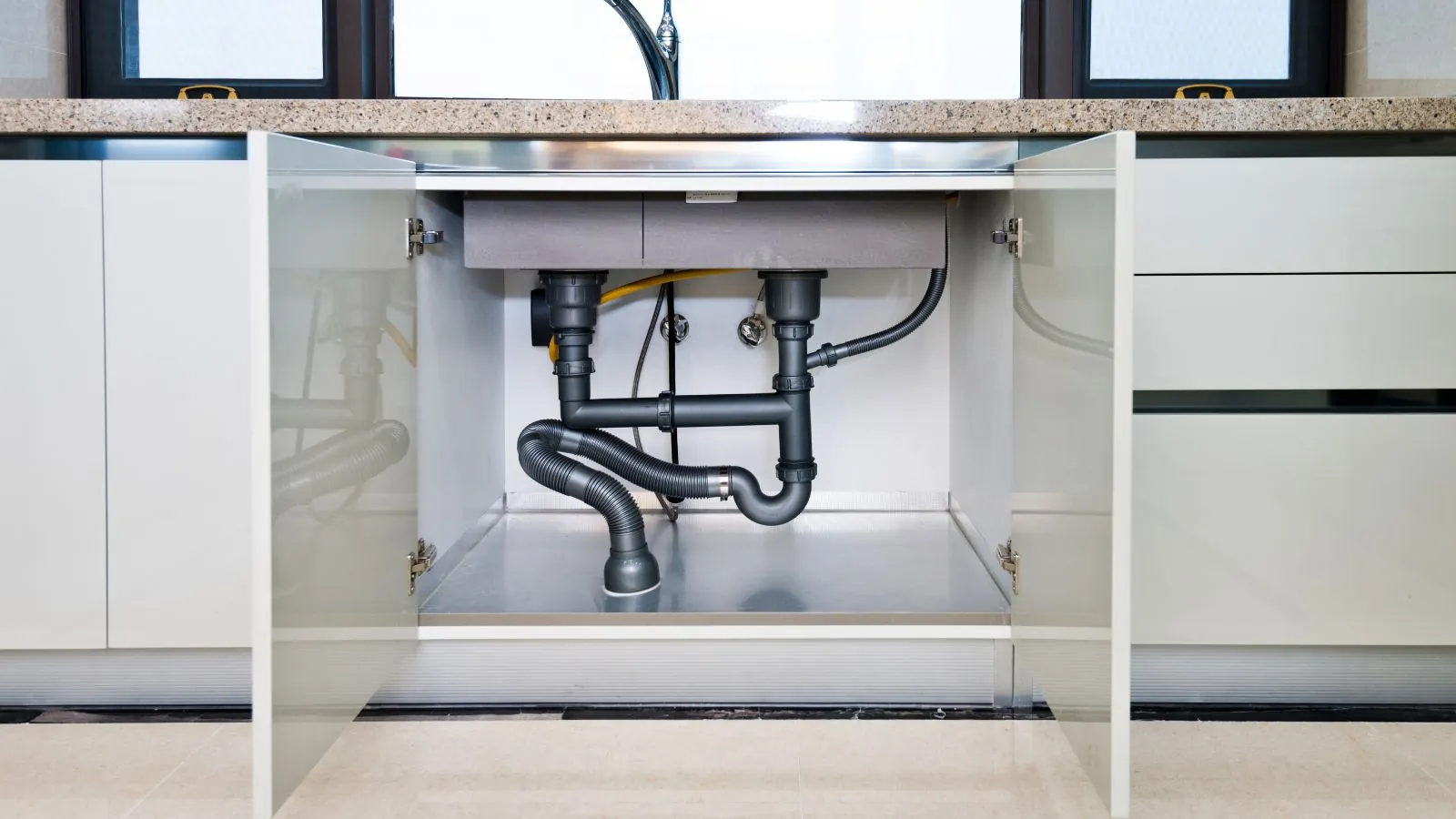
Kitchen water damage restoration covers the cabinets, countertops, flooring and walls soaked by a leak at the sink, dishwasher, refrigerator line or a pipe in the wall. Most kitchen leaks start small and out of sight, under a sink or behind a toe kick, and they do their damage over days or weeks. Call us at (630) 580-6401 if you see swollen cabinet bases, a soft floor or a musty smell, and same-day response is available when crews are free.
If water is actively spreading, shut off the supply under the sink or the main and call our 24/7 line. If the leak came from a machine, read appliance leak water damage too, because the appliance and the kitchen overlap.
Why kitchens are where water hides
Under the sink
Supply lines, drain traps and disposals leak slowly onto the cabinet floor.
Behind the dishwasher
A supply or drain failure wets the subfloor and the cabinet sides.
Behind the refrigerator
Ice maker lines leak behind the unit for weeks without a visible puddle.
In the wall
Supply lines and drains inside walls can leak at joints.
Above the cabinets
A leak from an upper bathroom or the ceiling can drop onto upper cabinets and counters.
What water does to cabinets
Solid wood and plywood cabinets can often be dried and kept. Particleboard and MDF swell, lose strength and rarely recover, especially at the base where the sink sits. Laminate faces delaminate, and the swelling is visible along the edges and the toe kick.
We check the cabinet base, the side panels and the floor of each cabinet with a moisture meter. A cabinet that looks fine from the front can be soaked at the back, and drying a cabinet with the doors closed is a common mistake.
How kitchen water damage is fixed
Stop and extract
We confirm the leak is stopped and extract water from floors and cabinets.
Open for drying
Toe kicks and back panels come off. Wet insulation and baseboard are removed. See structural drying.
Dry and monitor
Air movers and dehumidifiers run, with injection drying for cabinet voids when needed.
Rebuild or replace
Cabinets, flooring and walls are repaired or replaced once readings are dry.
Flooring under and around the kitchen
Kitchen flooring is often vinyl, tile or hardwood over plywood subfloor. Water gets under vinyl and tile through seams and stays there, and plywood and OSB subfloor swell. If the flooring is hardwood, see hardwood floor water damage repair, and if it is laminate the same cautions apply.
Countertops, backsplash and drywall
Laminate countertops swell at the seams and the sink cutout. Stone and solid surface usually survive, but they may have to be removed to let the cabinet below dry. Drywall behind the sink wicks water upward and is cut out if it is soft or stained. See wall and drywall water damage repair.
If it turns into a remodel
When damage is large enough that cabinets and flooring are being replaced, the repair can become a remodel. Ask your contractor and the city's Building Division whether permits apply, and keep your restoration records, since the drying readings help show the work was done properly before rebuild.
Safety steps before help arrives
- Unplug the appliance only if the outlet and floor are dry, or shut off its water valve.
- Do not run the appliance again until it is checked.
- Mop up pooled water so it does not reach other rooms.
- Photograph the area, then call (630) 580-6401.
For kitchen water damage, our water categories, drying goals and documentation follow ANSI/IICRC S500, the published standard for professional water damage restoration.
What drives the cost of kitchen water damage restoration
| Cost factor | Why it changes the scope |
|---|---|
| Cabinet material | Solid wood and plywood may be saved, particleboard usually is not. |
| Flooring type | Tile, vinyl and wood need different drying and replacement plans. |
| How long it leaked | Slow leaks soak subfloor and cabinet bases. |
| Countertops and walls | Removing counters or cutting walls adds scope. |
| Drying days | Cabinet voids and subfloors dry slowly. |
Many Illinois homeowners policies cover sudden leaks but not long-term seepage. Read your policy or ask your agent. We explain the scope and price before work starts, and (630) 580-6401 is the number for your real figure.
Common questionsQuestions about kitchen water damage restoration in West Chicago
Sometimes. Solid wood and plywood often can. Particleboard and MDF usually cannot. A moisture meter tells us which you have.
Soft or bubbling flooring, a musty smell, swollen cabinet bases and warped toe kicks are common signs.
If water is spreading, yes, and our line is open 24/7. A slow leak is less urgent but should be dried quickly.
We remove them when needed for drying. A cabinet or countertop installer handles reinstallation.
Kitchen leak spreading?
Call (630) 580-6401 and tell us where you see water.