
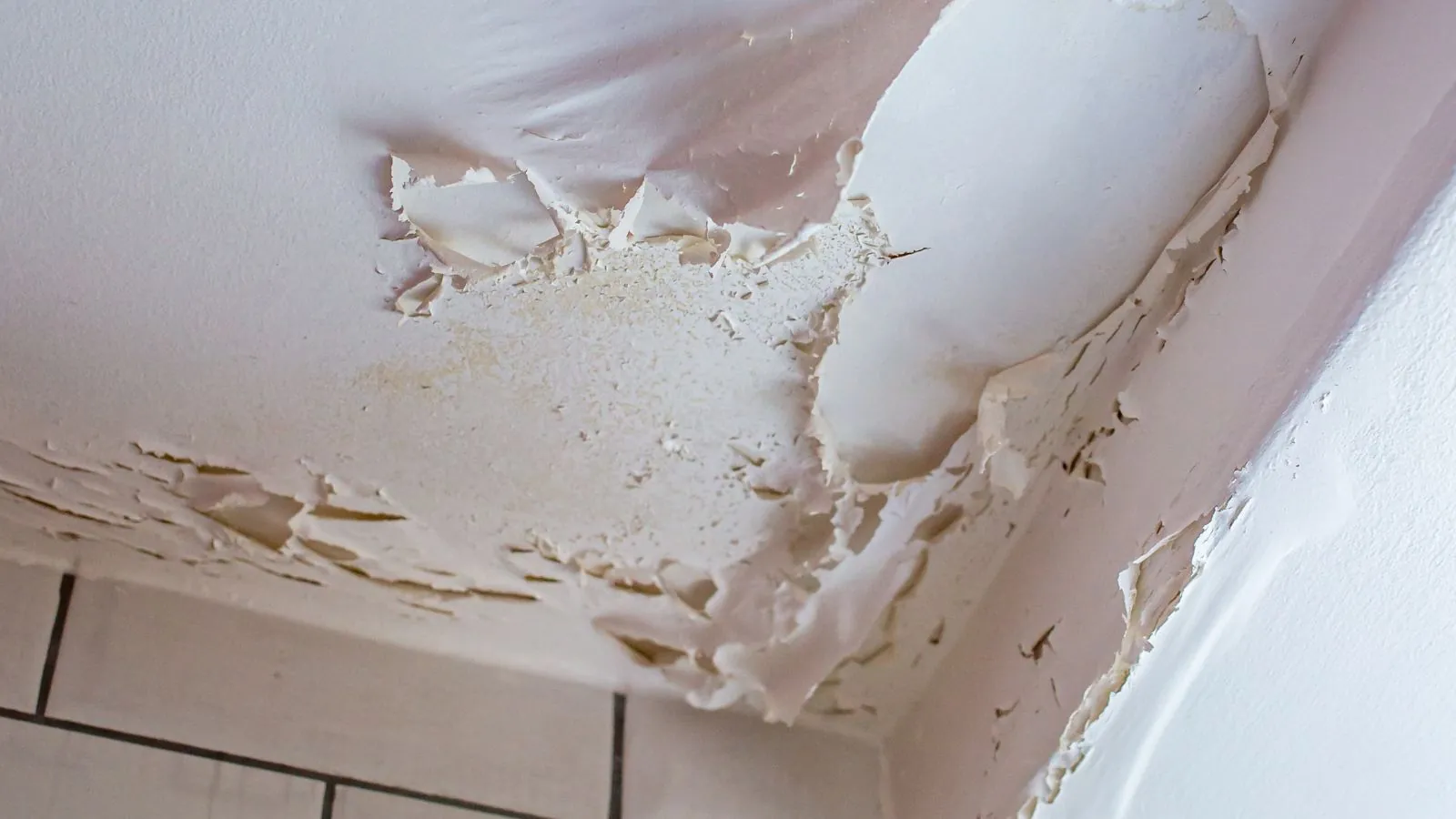
A wet ceiling is an emergency because it can sag and fall without warning, and our 24/7 line at (630) 580-6401 is open. Keep out from under a stain that is bulging or dripping, shut off power to any ceiling fixture on that circuit, move furniture away and set a bucket where it drips. If you can identify the source, such as a bathroom above, stop it. Then call us.
Ceiling water damage repair covers the removal of wet drywall and insulation, the drying of the framing above and the repair of the ceiling after the source is fixed. It also owns roof leaks, since a roof leak that shows up indoors is a ceiling problem first. We do not repair roofs, so a roofer handles the leak while we handle the water inside.
Act firstWhen a sagging ceiling is an emergency
Drywall holds water until it cannot, and then a section can drop. A ceiling that bulges, drips steadily or has a dark brown ring that keeps growing is carrying water above it. Do not poke it to drain it unless a trained person is doing it, because the weight of wet insulation can come down with it.
Where the water above your ceiling comes from
The roof
Missing shingles, failed flashing and ice dams let water through decking and insulation. See the roof section below.
A bathroom or kitchen above
Tub overflows, supply lines and drain failures drip through the floor assembly. A burst pipe does the same, only faster.
HVAC in the attic
A clogged condensate drain or sweating duct can wet a ceiling slowly. See AC leak water damage.
A water heater or washer upstairs
A failed unit on an upper floor can send water through the ceiling below.
Condensation and poor ventilation
Warm moist air hitting a cold attic roof can drip onto insulation.
Roof leaks that show up on your ceiling
A roof leak rarely appears directly under the hole. Water runs along rafters and decking and drips where it finds a gap, so the stain on your ceiling can be several feet from the real opening. Wet attic insulation then holds the water against the drywall for weeks.
O'Hare's 1991 to 2020 normal is about 38.4 inches of snow a year, and snow that melts and refreezes at the eaves forms ice dams that push water under shingles. If your ceiling stains appear in a thaw, look at the roof edge and get a roofer to check the flashing and ventilation.
We dry the attic and the ceiling, remove wet insulation and give you a written record for your claim. The roofer repairs the opening. We do both jobs in the right order, because a dry ceiling under a leaking roof is only a delay.
How a wet ceiling is assessed and fixed
Find the wet area
Moisture meters and thermal imaging show how far the water has spread above the stain.
Relieve and remove
Wet drywall and insulation are cut out in a controlled way, starting where water collects.
Dry the framing
Air movers and dehumidifiers dry joists and trusses. See structural drying.
Check for mold
If growth appears, mold remediation comes before new drywall.
Repair choices and trade-offs
Small, localized stains on dry drywall can sometimes be sealed and repainted once the source is fixed and the area is dry. Sagging, soft or repeatedly stained drywall should come out. Painting over a damp ceiling hides the problem and invites mold.
Textured and popcorn ceilings from older homes may need testing before disturbance. Ask any contractor about testing for older materials, and read wall and drywall water damage repair for how walls are handled.
Insulation and attic spaces
Wet fiberglass insulation compresses and loses its value, and wet cellulose can hold water for a long time. Both are usually removed, then replaced after the framing is dry. Leaving wet insulation in place keeps the ceiling damp from above.
Safety steps before help arrives
- Stay out of standing water in basements and crawl spaces until power is off.
- Do not use electrical devices in wet areas.
- Keep children and pets away from the water.
- Document the water level with photos and call (630) 580-6401.
For ceiling water damage repair, our water categories, drying goals and documentation follow ANSI/IICRC S500, the published standard for professional water damage restoration.
What drives the cost of ceiling repair
| Cost factor | Why it changes the scope |
|---|---|
| The source | A roof leak needs a roofer. A plumbing leak needs a plumber. Both are separate from our work. |
| Area and ceiling height | More ceiling area and higher ceilings mean more removal and drying. |
| Insulation above | Wet insulation is removed and later replaced. |
| Ceiling texture | Textured finishes cost more to match and may need testing. |
| Mold present | Growth adds containment and removal. |
Many Illinois homeowners policies cover sudden roof or plumbing leaks but not wear or neglect. Read your policy or ask your agent. We explain the scope and price before work starts, and (630) 580-6401 is the number for your real figure.
Common questionsQuestions about emergency ceiling water damage repair in West Chicago
Yes. The line is open 24/7. Keep out from under the stain, shut off the source if you can and call, and we will respond as soon as a crew is free. We explain the scope and price before work starts.
No. We dry the ceiling and attic and remove wet materials. A roofer repairs the roof.
If the stain is old, dry and not growing, it can be low risk. If it is damp, sagging or spreading, treat it as an emergency and call.
Only after the source is fixed and the drywall and insulation are dry. Painting over a damp ceiling traps moisture.
Ceiling dripping now?
Call (630) 580-6401 and tell us what you see above and below it.