
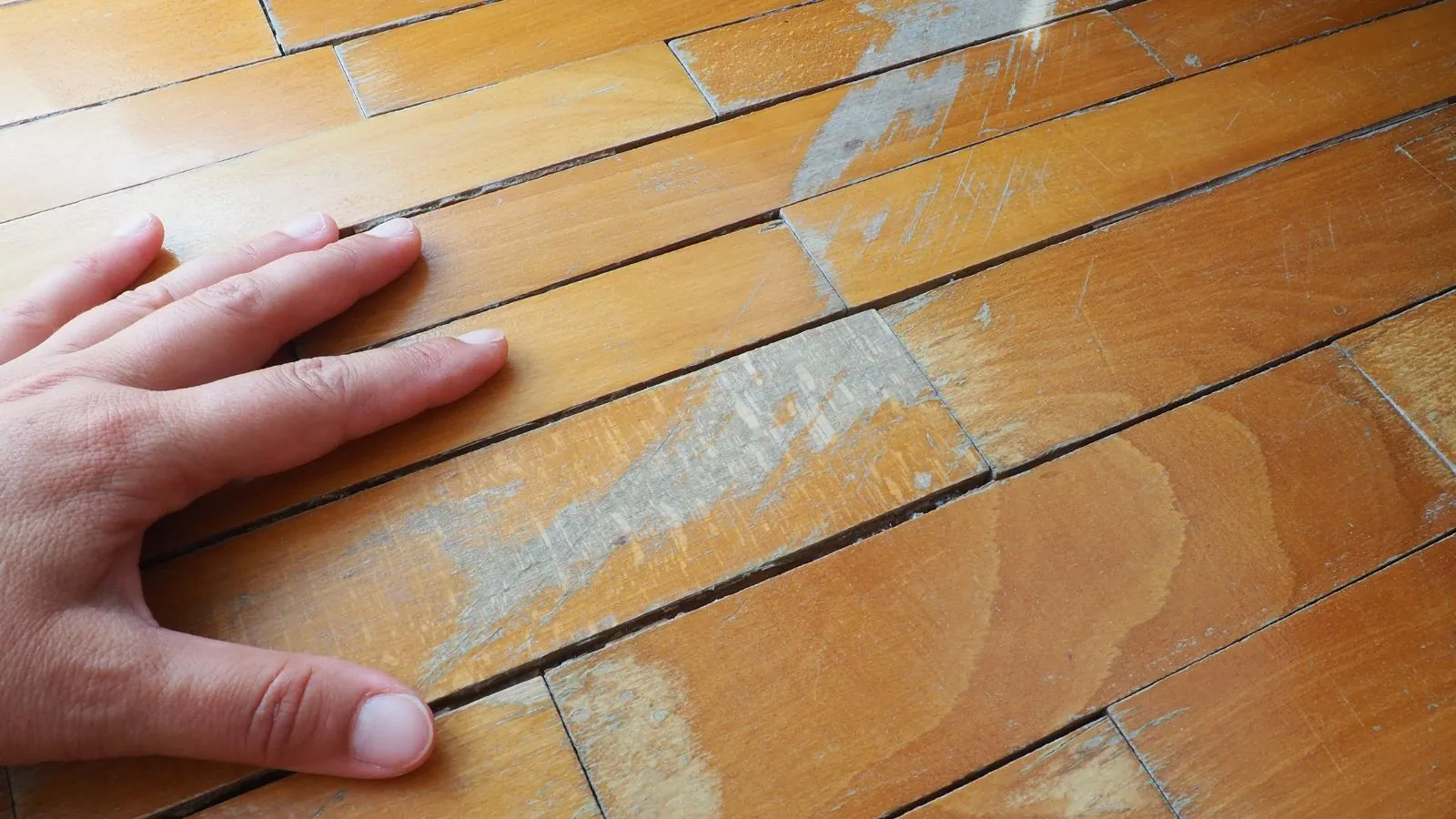
Hardwood floor water damage repair starts with a simple fact. Wood takes on water and swells, and then it shrinks and warps as it dries. If you act quickly, many wood floors can be saved.
If water sits, boards cup, crown or buckle, and finish and glue fail. Call us at (630) 580-6401 as soon as you see wet boards, and same-day response is available when crews are free.
This page covers solid hardwood, engineered wood and laminate. Each reacts differently, so we identify the floor before choosing a drying method.
What wet hardwood looks like
Cupping
Board edges rise higher than the center. This happens when the bottom of the board is wetter than the top.
Crowning
The center rises higher than the edges, often after the floor is sanded while still wet.
Buckling
Boards lift off the subfloor. This is the most severe stage and usually means replacement.
Gaps and staining
Boards shrink and gap as they dry, and dark stains mean water or mold at the finish.
A musty smell
Moisture under the floor can grow mold before the surface looks bad.
Solid, engineered and laminate floors
Solid hardwood can often be dried and refinished if it has not been wet too long. Engineered wood has a thin wood layer over plywood, and when water gets under it the layers can separate. Laminate floors are a fiberboard core that swells and rarely recovers.
We use a moisture meter set for the species and a thermal camera to see how far the water went. Many floors that look fine are wet underneath, and drying only the surface leaves the problem.
How we try to save a wood floor
Extract
Surface water comes out first. See water extraction.
Map and test
We map moisture in the boards, the subfloor and the slab or joists.
Dry in place
Floor drying mats or panels, air movers and dehumidifiers pull moisture out of the boards and the subfloor.
Wait, then decide
We recheck readings and let the floor settle before anyone sands or refinishes.
When boards have to come out
If a board has buckled, the subfloor is wet or the floor has been wet for many days, removing boards can be the better choice. Taking out a few rows lets the subfloor dry and relieves pressure on the rest. Replacing a section often costs less than refinishing a floor that keeps moving.
Why you should not sand early
Sanding a cupped floor before it has dried flat leaves it crowned when moisture leaves the wood. A refinishing contractor will want stable readings. In Illinois, seasonal humidity also moves wood, so a floor that gaps in dry winter air is different from a floor that was flooded. We help you tell which you have.
Floors over basements, slabs and crawl spaces
The floor system under the boards matters. Wood over a damp slab or a wet crawl space keeps absorbing moisture after the surface looks dry. See slab leak water damage and crawl space water damage if the source is below. A flooded basement can also wet the floor above through vapor.
Older houses such as those in East Washington often have original wood floors worth saving, so tell us early which floors matter to you.
Safety steps before help arrives
- Stay off soaked flooring that sags or feels soft underfoot.
- Lift furniture and rugs onto blocks and foil or plastic.
- Keep fans pointed at the surface only if the power is safe.
- Do not use a household vacuum on wet carpet, then call (630) 580-6401.
For hardwood floor water damage, our water categories, drying goals and documentation follow ANSI/IICRC S500, the published standard for professional water damage restoration.
What drives the cost of hardwood floor water damage repair
| Cost factor | Why it changes the scope |
|---|---|
| Floor type | Solid, engineered and laminate floors have different save rates. |
| How long it was wet | The longer it sat, the more likely boards must be replaced. |
| Area affected | More floor area needs more drying mats and time. |
| Subfloor condition | A wet subfloor has to be dried or replaced. |
| Refinishing | Sanding and refinishing are separate from drying. |
Many Illinois homeowners policies cover sudden water damage to floors but not long-term moisture. Read your policy or ask your agent. We explain the scope and price before work starts, and (630) 580-6401 is the number for your real figure.
Common questionsQuestions about hardwood floor water damage repair in West Chicago
Often yes if it is caught quickly and dried properly. Buckled boards and floors that stayed wet for many days are harder to save.
After readings are stable and the floor is flat. Rushing it leaves crowning and finish problems.
Laminate swells at the edges and rarely recovers. We check, but expect replacement.
No. We dry and restore. A flooring contractor sands and refinishes once readings are stable.
Wood floor wet?
Call (630) 580-6401 and tell us what kind of floor you have.