
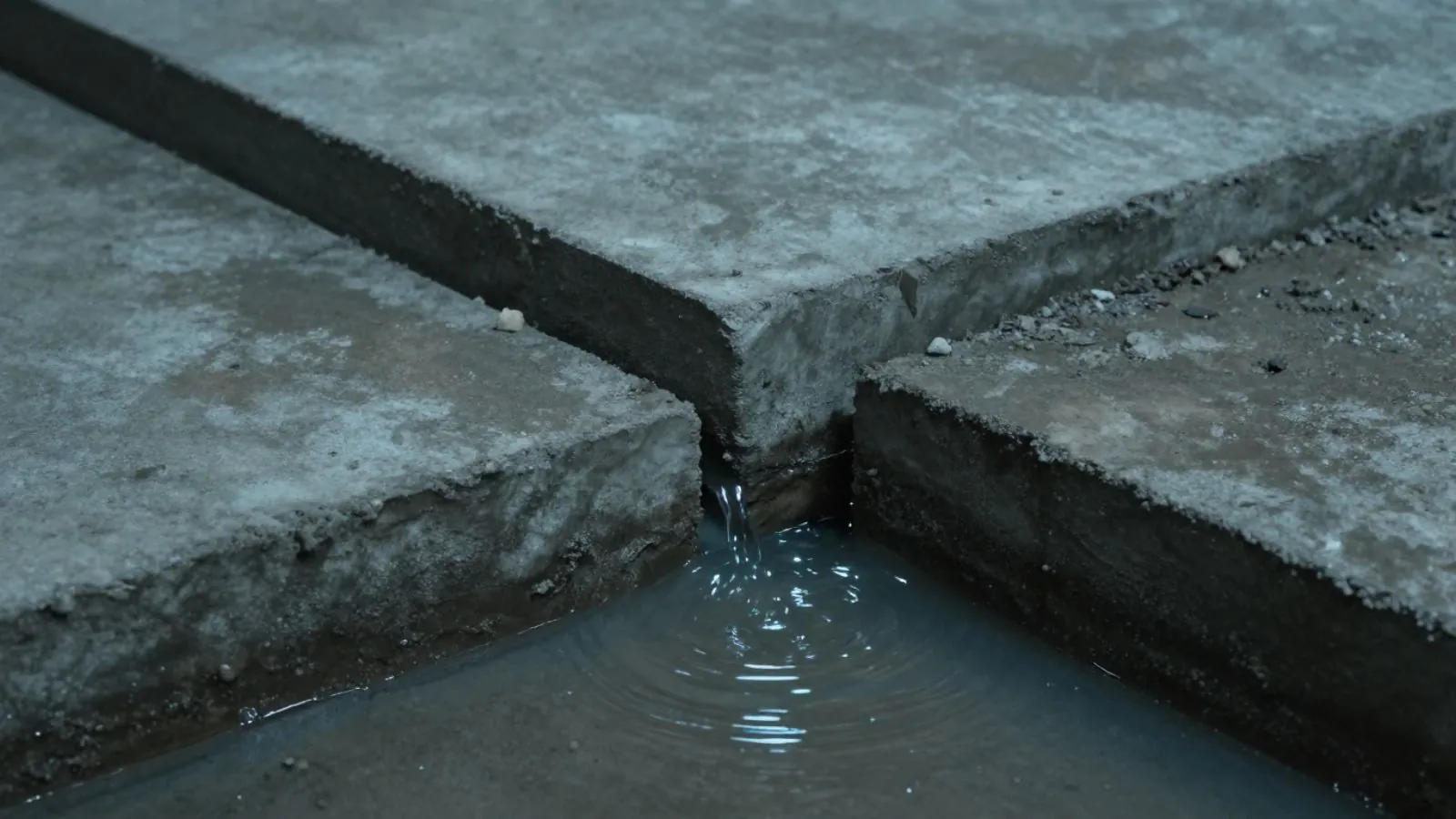
Slab leak water damage is an emergency when water is coming up through a floor, and our 24/7 line at (630) 580-6401 is open. Shut off the main water valve, turn off electricity to wet areas only if it is safe to reach the panel dry, and keep people and pets off the wet floor. Then call us and call a plumber, because a leak under a concrete slab has to be found before the repair is done.
Warm spots, hissing sounds or a floor that feels damp?
If a floor feels warm under your feet, you hear water running when every fixture is off or you see damp carpet with no obvious source, a leak beneath the slab may be the cause. A slab leak is a break in a water line that runs under or inside the concrete floor. Slab leak water damage cleanup is the restoration that follows, including drying the flooring and structure.
What a slab leak is and how common it is here
A slab leak is a pipe failure beneath or inside a concrete slab. It happens in slab-on-grade houses, in additions, in garages and in the slab portions of homes that also have basements. We do not have local data on how often it happens in West Chicago, so we do not claim it is common here. We handle the damage when it does.
The mechanism is straightforward. Water lines under a slab can corrode, rub against gravel or concrete, or fail at a joint. Because the line is hidden, the first signs are often a high water bill, damp flooring or a sound of running water.
Signs of a slab leak
Water meter running with everything off
Close every fixture and look at the meter's low-flow indicator. A moving dial points to a leak.
Warm or hot spots on the floor
A leaking hot line can warm the concrete above it.
The sound of water
A hiss or a trickle with no fixture running suggests a pressurized leak.
Cracked or lifted flooring
Water under the slab can heave tile, buckle wood and stain carpet.
Low water pressure
Water escaping before it reaches your fixtures lowers pressure.
Who does what
A plumber finds the leak with acoustic and thermal tools and repairs or reroutes the line. We do not locate or repair slab leaks. We handle what the water wet, including carpet, pad, subfloor, baseboards and the lower wall. We also dry the slab surface and the flooring above it, and we document the loss.
That split matters because drying and repair must be coordinated. If we dry the floor and the plumber opens the slab afterward, the work must happen in a sensible order, and we plan it with you.
What cleanup involves
Confirm the water is off
The main must be off or the line isolated before drying starts.
Extract and survey
Wet vacuums remove surface water. Meters and thermal imaging map the wet area.
Remove what cannot dry
Carpet pad, soft flooring and wet baseboard come out. See carpet water damage and hardwood floor water damage.
Dry and verify
Air movers and dehumidifiers run until readings are dry. See structural drying.
What to expect with flooring
Concrete slabs are porous and hold moisture. Even after the leak is fixed, moisture can rise through the slab for days or weeks. Wood flooring and glued carpet over a damp slab can cup, buckle or grow mold, so we test the slab and flooring before anything new goes down.
If you are replacing floors, wait for readings to come down. Rushing a new floor over a damp slab is how a second claim starts.
Safety steps before help arrives
- Shut off the main valve or the valve nearest the leak.
- Stay out of rooms where water is near outlets, and cut breakers only from a dry panel.
- Do not use appliances or light fixtures that are wet.
- Move belongings off the floor and call (630) 580-6401.
For slab leak water damage, our water categories, drying goals and documentation follow ANSI/IICRC S500, the published standard for professional water damage restoration.
What drives the cost of slab leak cleanup
| Cost factor | Why it changes the scope |
|---|---|
| How long it leaked | A slow leak can saturate flooring and the slab surface over weeks. |
| Flooring type | Wood, laminate, tile and carpet need different drying plans. |
| Area affected | More floor area means more equipment. |
| Hot or cold line | A hot water leak warms the space and can speed up mold growth. |
| Coordination with the plumber | Drying and slab repair must be scheduled together. |
Many Illinois homeowners policies cover sudden water damage but may not cover the cost of reaching or repairing the pipe, and they may exclude slow leaks. Read your policy or ask your agent. We explain the scope and price before work starts, and (630) 580-6401 is the number for your real figure.
Common questionsQuestions about slab leaks in West Chicago
Yes. The line is open 24/7. Shut off the main, call, and we will respond as soon as a crew is free. We explain the scope and price before work starts.
A moving water meter with all fixtures off, warm floor spots, the sound of running water and damp flooring are the usual signs. A plumber confirms it.
No. A plumber locates and repairs the line. We dry and restore what the water wet.
Concrete holds moisture and releases it slowly. We keep drying until moisture meters read dry, then flooring can go back.
It could be. It could also be a running toilet or an outdoor line. A meter test and a plumber can tell the difference.
Suspect a slab leak?
Call (630) 580-6401 and describe the signs you are seeing.