
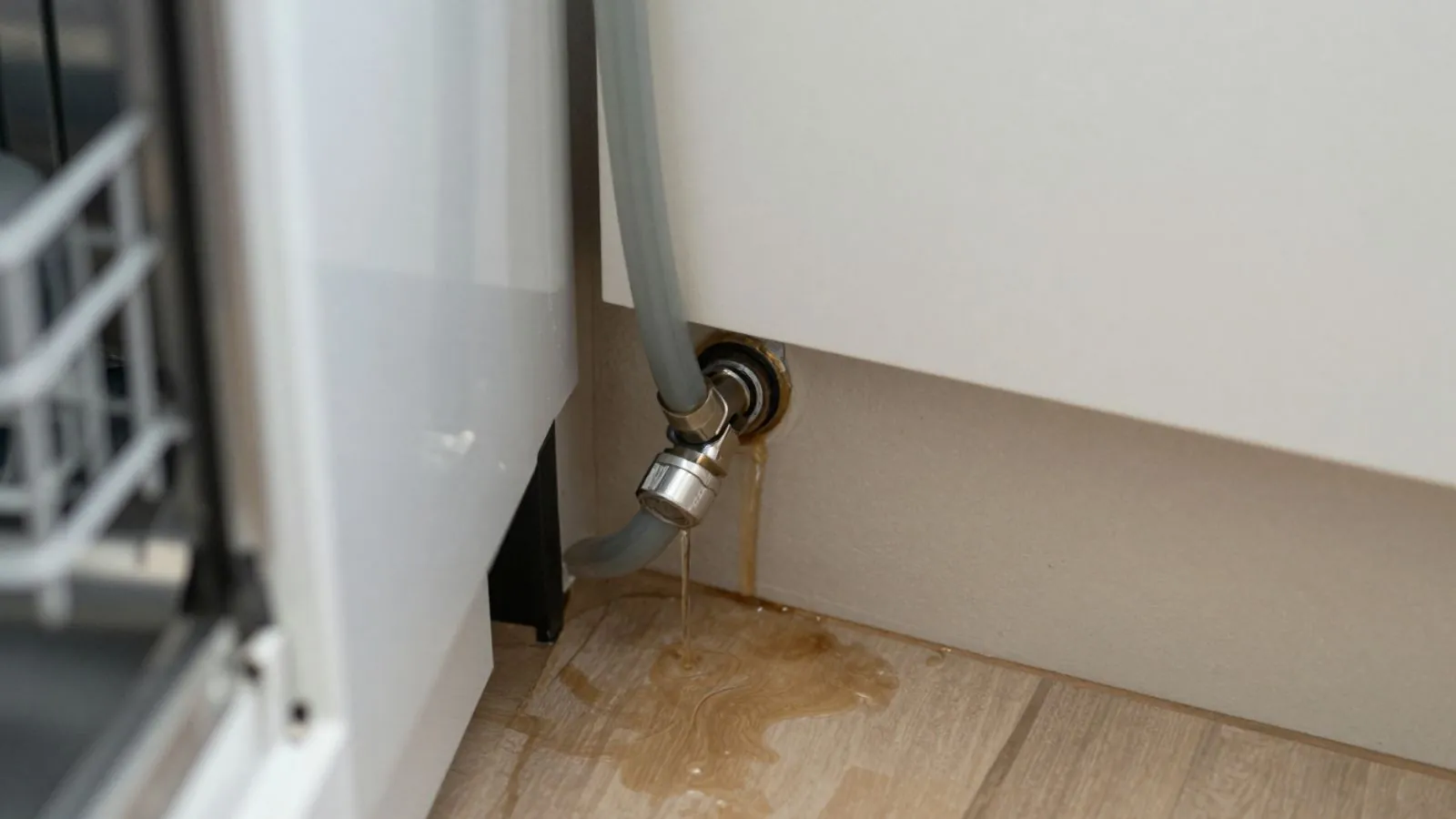
An appliance that is leaking is an emergency when the water is spreading, and our 24/7 line at (630) 580-6401 is open. Unplug the appliance if the cord and outlet are dry, close its shutoff valve or the main, and pull the unit away from the wall only if the floor is not electrified. Lay towels to slow the spread and keep children and pets away from wet floors.
Appliance leak water damage cleanup covers the water that comes out of a dishwasher, washing machine, refrigerator ice maker or similar machine and soaks the floor and walls around it. A technician repairs the appliance. We dry the structure, because a supply hose that burst behind a machine can wet the wall and subfloor for hours before anyone notices.
Act firstWhen an appliance leak is an emergency
A burst washing machine hose can run at full household pressure, which is far more water than most people expect. A dishwasher drain failure spreads more slowly but sends water under cabinets. If the floor is soaked or water is running through to a room below, treat it like any other flood and call.
Where appliances leak and what each one does
| Appliance | Common failure | Where the water goes |
|---|---|---|
| Washing machine | Braided supply hose, drain hose or door seal | Floor, subfloor and the room below. |
| Dishwasher | Supply line, door gasket or drain connection | Under cabinets and into the subfloor. |
| Refrigerator or ice maker | Small supply line or clogged defrost drain | Behind the unit and under flooring. |
| Water softener or filter | Fittings and housings | Utility room floor and wall. |
| Sump or utility sink pump | Discharge line or float failure | Basement floor. |
Washers and the hose that fails
The rubber or braided hoses behind a washer are among the most common causes of appliance flooding. They carry full supply pressure all the time, even when the machine is off. Many people turn the supply valves off when they leave for a trip, and it is a cheap habit.
If a washer is on an upper floor, a failed hose can send water through the ceiling below. Read ceiling water damage repair if you see a stain, and keep out from under a bulge.
Dishwashers and refrigerator lines
Dishwasher leaks tend to start slowly and show up as a soft spot in the floor in front of the unit or a warped toe kick. A refrigerator ice maker line runs behind the fridge, so a pinhole can leak for weeks. The floor under a fridge is often wet before the owner notices anything.
When the water reaches the cabinets, the job overlaps with kitchen water damage restoration, which covers cabinets, toe kicks and the under-sink area.
What cleanup involves
Stop and extract
We confirm the supply is off and pull the water out with wet vacuums and extraction units.
Find the moisture
Meters and thermal imaging check the subfloor, wall base and rooms below.
Remove what cannot dry
Wet insulation, baseboard and swollen flooring are removed. Water-damaged hardwood floors are assessed for cupping.
Dry and verify
Air movers and dehumidifiers run until readings are dry.
Reducing the chance of a repeat
- Replace rubber washer hoses with braided stainless hoses and check them every few years.
- Turn off washer supply valves when you travel.
- Inspect the floor around the dishwasher and fridge for soft spots.
- Do not run a dishwasher or washer overnight when no one is home.
- Consider a water leak sensor behind appliances.
Safety steps before help arrives
- Unplug the appliance only if the outlet and floor are dry, or shut off its water valve.
- Do not run the appliance again until it is checked.
- Mop up pooled water so it does not reach other rooms.
- Photograph the area, then call (630) 580-6401.
For appliance leak water damage, our water categories, drying goals and documentation follow ANSI/IICRC S500, the published standard for professional water damage restoration.
What drives the cost of appliance leak cleanup
| Cost factor | Why it changes the scope |
|---|---|
| How long it ran | A hose that ran overnight soaks far more than one caught in minutes. |
| Flooring type | Hardwood, laminate and carpet each need a different drying plan. |
| Rooms below | Water that reached a ceiling or a basement adds a second drying area. |
| Cabinets and walls | Water in a wall or under cabinets needs opening up to dry. |
| Drying days | More equipment for more days costs more. |
Many Illinois homeowners policies cover sudden appliance failures but not slow leaks or wear. Read your policy or ask your agent. We explain the scope and price before work starts, and (630) 580-6401 is the number for your real figure.
Common questionsQuestions about emergency appliance leak water damage cleanup in West Chicago
Yes. The line is open 24/7. Shut off the water supply and unplug the appliance if it is safe, then call, and we will respond as soon as a crew is free. We explain the scope and price before work starts.
No. An appliance technician or plumber repairs the machine. We extract the water and dry the structure around it.
Close the supply valves behind the machine or shut the main, unplug the washer if the outlet is dry and call. Do not run a household vacuum on wet floors.
Yes. A fridge or dishwasher line that drips for weeks can rot subfloor without any puddle. Soft flooring or a musty smell near the machine is a sign to have it checked with a moisture meter.
Appliance leaking now?
Call (630) 580-6401 after you shut off the supply.