
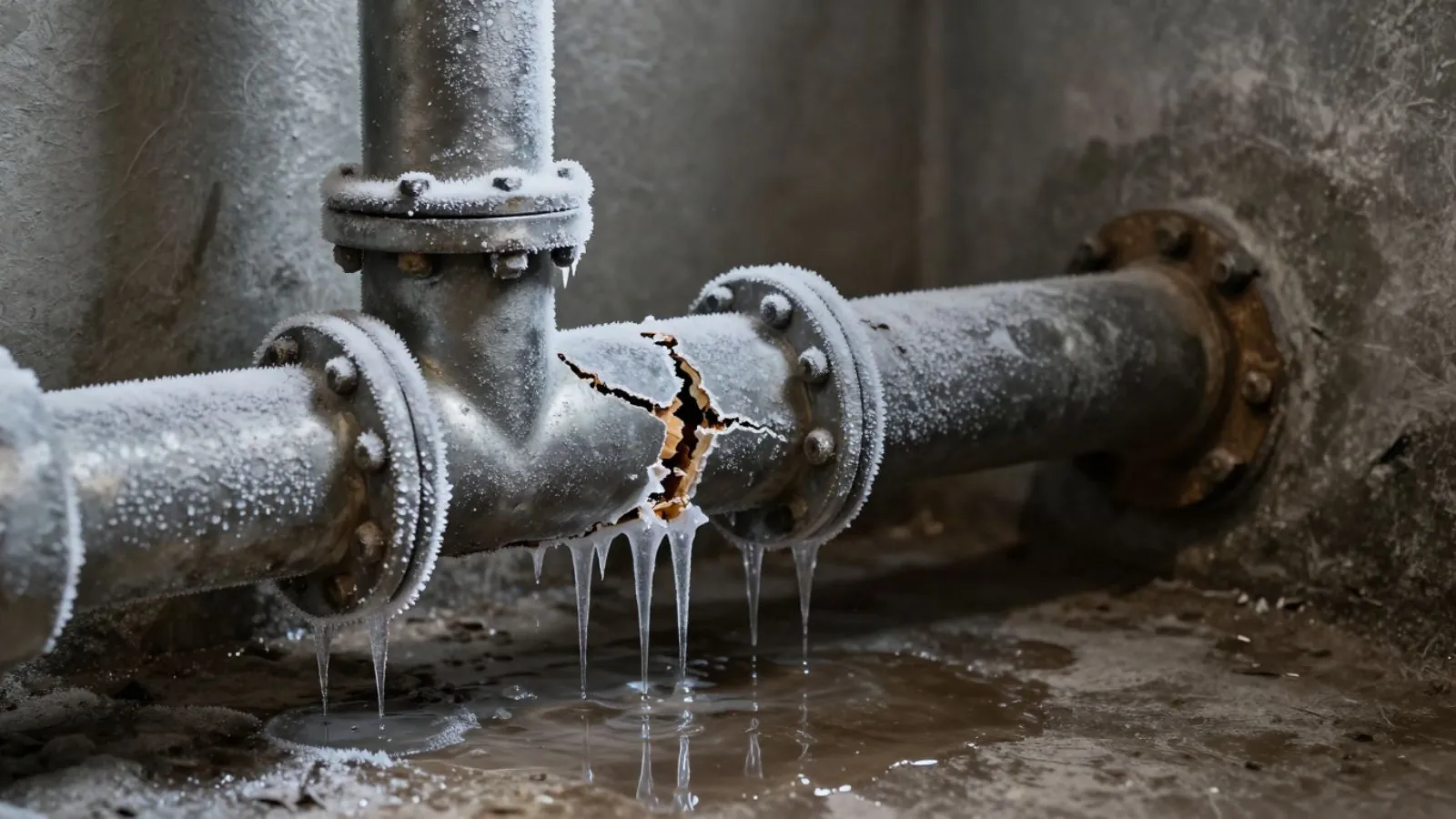
A frozen or thawing pipe can turn into an emergency without warning, and our 24/7 line at (630) 580-6401 is open. If a pipe has split, shut off the main water, open the nearest faucet, keep heat on and move anything wet to a dry spot. If a pipe is frozen but not yet split, leave the faucet open a little and warm the area gently. Never use an open flame.
Frozen pipe water damage restoration begins when a frozen line splits, thaws and starts to leak. Ice blocks the pipe and raises pressure behind it until the wall of the pipe gives way, and the water does not escape until the ice melts. That is why the flooding often starts after the cold snap, not during it.
Act firstWhen a frozen pipe is an emergency
A pipe that has split does nothing for hours. Then the temperature climbs, the ice melts and a fully pressurized line begins to flow. If you find frost on a pipe, no water at a tap or a bulge in a line, shut the main before the thaw and call. A dry house is far easier to keep dry than a wet one.
How cold West Chicago actually gets
NOAA's 1991 to 2020 normals for O'Hare show about 38.4 inches of snow a year and roughly 6.5 days a year at or below 0 degrees Fahrenheit. That is not Minnesota, but it is cold enough that one night in the single digits can freeze an exposed line. The risk is in lines that run through garages, crawl spaces, exterior walls and unheated additions.
So the practical step is to keep cabinet doors open on exterior walls during a hard cold snap, let a faucet drip, and know where your shutoff is before January.
Where pipes freeze first
Outside walls
Pipes in exterior walls sit between the cold and the heat and often have thin insulation.
Garages and unheated additions
A supply line running through a cold garage ceiling is a common failure spot.
Crawl spaces and rim joists
Cold air moves through gaps at the foundation. See crawl space water damage.
Hose bibs and exterior fixtures
Unshielded spigots can freeze and split inside the wall even when the visible part looks fine.
What cleanup looks like after a freeze
Stop the water
Close the main and confirm no more water is escaping. A plumber repairs the pipe.
Extract
Standing water comes out with pumps and wet vacuums. See water extraction.
Find the moisture
Meters and thermal imaging locate wet insulation and drywall, which is often in a wall or ceiling you cannot see.
Dry and verify
Air movers and dehumidifiers run until readings are dry. See burst pipe water damage for what damage typically looks like.
Thaw damage in finished spaces
A split pipe in a finished basement or garage ceiling can wet drywall, insulation and flooring below it. If it leaks above a ceiling, read ceiling water damage repair before anyone walks underneath. Insulation that gets wet loses its value and often has to be replaced.
Frozen pipes also tend to split in more than one place. After the first repair, the rest of the line can leak when it is pressurized again, so ask your plumber to test the full run.
Preventing a repeat
- Insulate pipes in garages, crawl spaces and exterior walls.
- Seal gaps around pipes where cold air gets in.
- Let a faucet drip on the coldest nights.
- Disconnect garden hoses and shut off exterior spigots for the season.
- Keep the thermostat set above 55 degrees if you leave town.
Safety steps before help arrives
- Shut off the main valve or the valve nearest the leak.
- Stay out of rooms where water is near outlets, and cut breakers only from a dry panel.
- Do not use appliances or light fixtures that are wet.
- Move belongings off the floor and call (630) 580-6401.
For frozen pipe water damage, our water categories, drying goals and documentation follow ANSI/IICRC S500, the published standard for professional water damage restoration.
What drives the cost of frozen pipe cleanup
| Cost factor | Why it changes the scope |
|---|---|
| How long it ran | A pipe that thawed overnight soaks far more than one caught in minutes. |
| Rooms and floors affected | Water travels from the split down through ceilings and walls. |
| Insulation and drywall | Wet insulation and drywall are usually removed rather than dried. |
| Hidden moisture | Thermal imaging and meters define how much of the wall must open. |
| Drying days | Cold, damp spaces dry slowly and need more equipment time. |
Many Illinois policies cover sudden freeze-ups, though not damage from a house left unheated, so check your wording. We explain the scope and price before work starts, and (630) 580-6401 is the number for your real figure.
Common questionsQuestions about emergency frozen pipe water damage restoration in West Chicago
Yes. The line is open 24/7, including holidays and overnight thaws. Shut off the main and call, and we will respond as soon as a crew is free. We explain the scope and price before work starts.
No. Many freeze without splitting. But a pipe that has been frozen is weakened, so watch it as it thaws and keep the main valve ready to close.
Thawing is a plumber's job. We handle the water damage after a split pipe leaks.
Often when it is sudden and the house was heated, but not always. Check your policy and keep photos and a written record of the work.
Pipe split in the cold?
Call (630) 580-6401 and we will tell you what to do while a crew is on the way.