
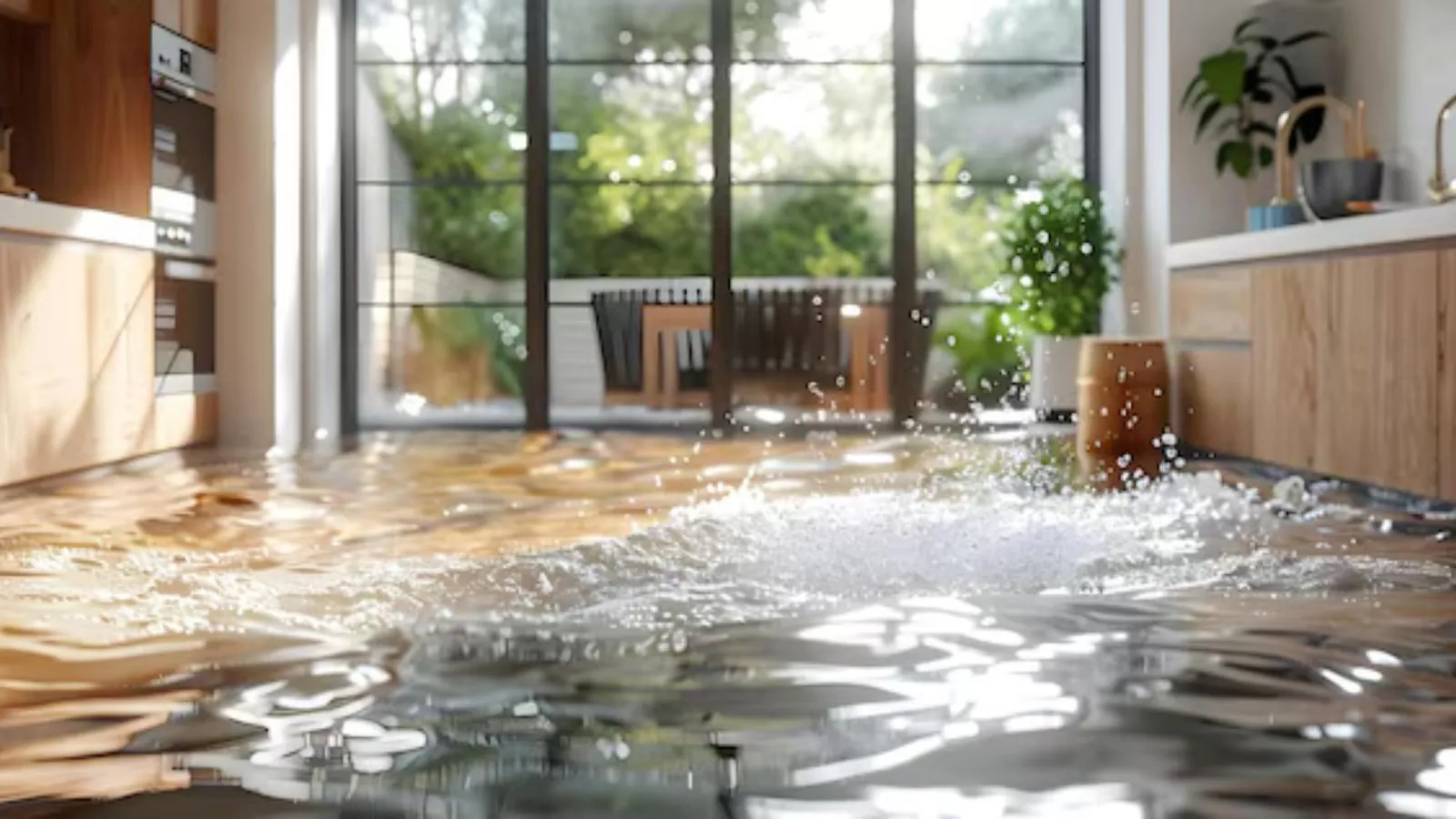
Flood damage is an emergency from the first inch. Our 24/7 line at (630) 580-6401 is open now, and while you wait you should get everyone out of the water, shut off the electricity at a dry panel only if it is safe to reach, and lift what you can above the waterline. Floodwater is never clean, so do not wade through it barefoot or let children and pets near it.
Flood damage cleanup is the work of removing river, groundwater or surface water from a building, taking out what cannot be saved and sanitizing and drying what can. In West Chicago, IL, that usually means water that came from outside, which is a different job from a burst pipe.
Act firstWhen rising water is an emergency
Water that comes in from outside carries soil, bacteria and sometimes sewage. Under the ANSI/IICRC S500 standard it is treated as Category 3, no matter how clear it looks. That changes what we wear, what we cut out and how we dry.
If water is still rising, do not go into a basement to save belongings. Stairs, electricity and sudden water pressure on a door are real dangers. Call 911 for any electrical or gas hazard first.
The April 2013 storm and what it showed
The National Weather Service recorded 5.48 inches of rain at West Chicago on April 17 and 18, 2013, with Winfield at 6.13 and Wheaton at 6.91. The West Branch DuPage River near Warrenville crested around 17 feet against an 11.5 foot flood stage. Homes far from any river took water because the ground and storm sewers were already full.
The practical lesson is that flooding here is not limited to riverfront lots. Kress Creek and the West Branch DuPage River run through the city, and a wet spring can fill basements well outside the mapped floodplain. Check your own address on the FEMA flood map, and ask your insurer whether you carry flood coverage at all.
What flood cleanup involves
Make it safe
We check power, gas and structural hazards and set up protective gear and containment for Category 3 water.
Remove the water and the debris
Pumps and extraction units clear standing water. Soaked carpet, padding and drywall that cannot be sanitized come out.
Clean and treat
Surfaces are cleaned and treated with antimicrobial products. Hard materials like concrete and framing are kept.
Dry and verify
Air movers and dehumidifiers run until moisture meters show the structure is dry. Mold remediation follows only if growth is found.
What can be saved and what cannot
Hard, nonporous surfaces such as concrete, tile and sealed framing can usually be cleaned and kept. Porous materials soaked by flood water, including carpet pad, insulation and drywall, usually cannot be made safe and are removed. Upholstered furniture and mattresses that sat in floodwater are normally discarded.
We photograph and list what comes out so you have it for your claim. Solid wood furniture and some contents can be cleaned, and we tell you honestly which are worth saving.
| Material | After Category 3 flood water | Why |
|---|---|---|
| Concrete floor and block walls | Clean, treat and dry | Nonporous, does not hold contamination. |
| Wood framing and subfloor | Clean, treat and dry if sound | Dries well if opened up early. |
| Drywall and insulation | Cut out and discard | Porous, absorbs contaminated water. |
| Carpet and pad | Remove and discard | Cannot be sanitized in place. |
| Solid wood furniture | Often cleanable | Depends on time and finish. |
General guidance based on the published S500 standard. We assess each material on site.
How flooding differs from a storm leak or a basement seep
A roof or window leak during a storm is covered on our storm water damage page, and a basement that seeps through the floor slab after rain is a basement water damage job. This page is for water that rose up from outside the building. The sources overlap, so call and describe what you see and we will sort it out.
Insurance and flood coverage
In Illinois, a standard homeowners policy usually covers sudden and accidental water damage but not flood, and sewer or drain backup often needs an added endorsement. Flood is a separate policy. Read yours or ask your agent before you call, and photograph the water line, the damage and every item removed.
We document the work in writing as it happens. That record is useful whatever your coverage turns out to be.
What drives the cost of flood cleanup
| Cost factor | Why it changes the scope |
|---|---|
| Water category | Flood water is Category 3, which adds protective gear and removal of porous materials. |
| Depth and duration | Water that stood for days soaks higher and needs more material removed. |
| Square footage | More area means more extraction, cleaning and drying equipment. |
| Finished or unfinished space | A finished basement has carpet, drywall and trim to remove and later rebuild. |
| Rebuild scope | Removal and drying are separate from replacing drywall, flooring and trim. |
We explain the scope and price before work starts. Want your real number? Call (630) 580-6401.
Serving the towns around West Chicago
Flooding along the West Branch DuPage River does not stop at the city line. Our Winfield page covers the village's creeks and river frontage, and the Carol Stream page explains how Klein Creek and the Armstrong Park reservoirs affect that side of the county.
Common questionsQuestions about emergency flood damage cleanup in West Chicago
Yes. The line is open 24/7, including storms that hit overnight. Call, tell us how deep the water is and whether it is still rising, and we will respond as soon as a crew is free. We explain the scope and price before work starts.
Usually not. Standard policies tend to cover sudden and accidental water damage, but flood is a separate policy and sewer backup often needs an endorsement. Check your policy or ask your agent, and keep records of every loss.
Floodwater picks up soil, bacteria and contaminants as it moves across the ground, so it is treated as Category 3 under the S500 standard even if it looks clean. That is why porous materials are removed.
As soon as the contaminated material is out and the structure is clean. Mold can start within roughly 24 to 48 hours on wet surfaces, so we move fast and verify with moisture meters.
Flood water still in the house?
Call (630) 580-6401 and tell us how deep it is and whether it is still rising.