
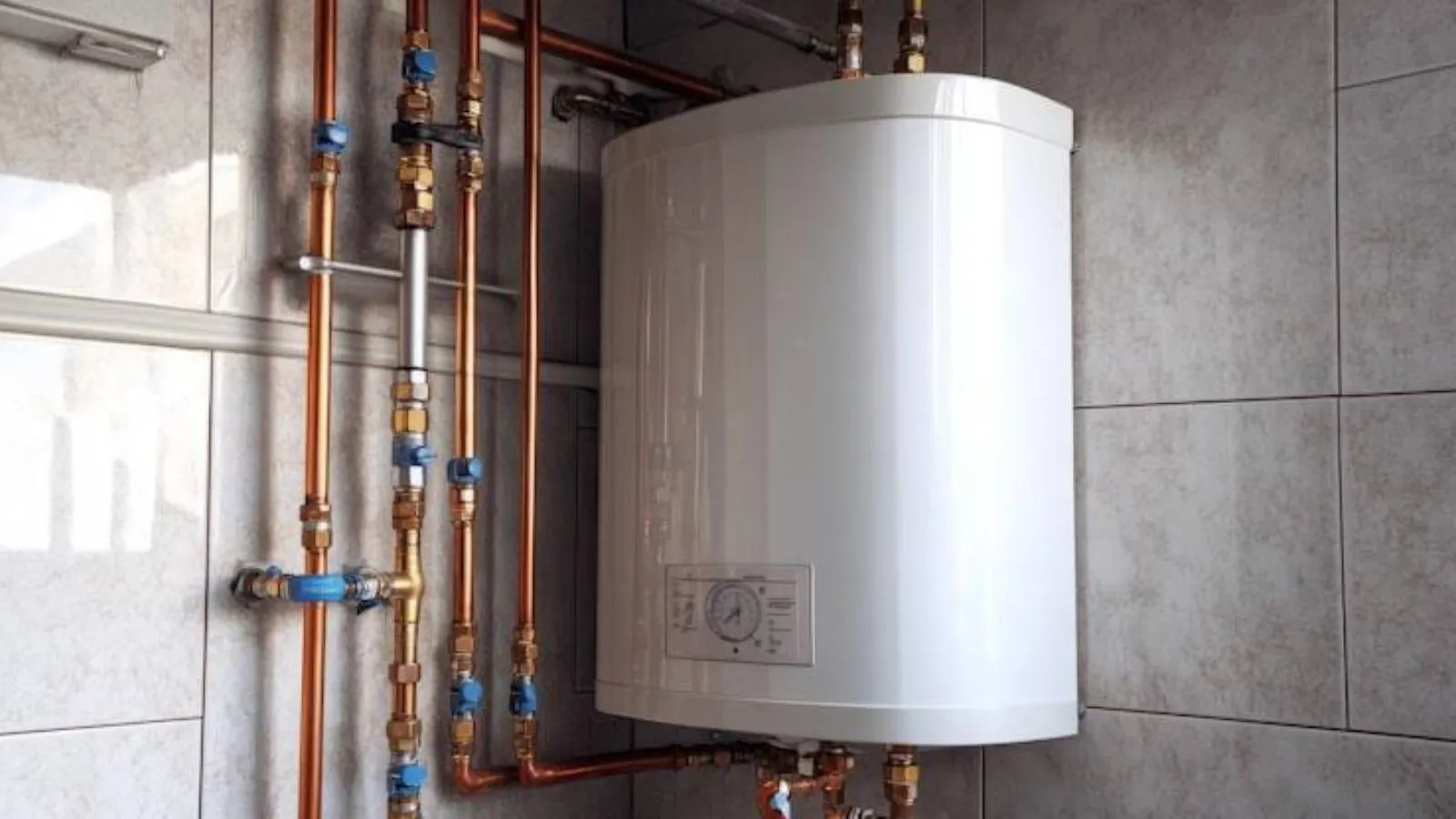
A leaking water heater is an emergency, and our 24/7 line at (630) 580-6401 is open. Shut off the cold water supply valve on top of the tank, turn off the power at the breaker for an electric unit or set a gas unit to pilot, and keep everyone out of the room if the floor is wet near wiring. If you smell gas, leave the house and call 911 and your gas utility before anything else.
Water heater leak cleanup is the removal of the water, the drying of the floor and walls around the tank and the documentation of the loss. A plumber replaces the heater. We make sure the room it sits in is dry before the new one goes in, because a wet wall behind a new tank is how a second leak starts.
Act firstWhen a water heater leak is an emergency
A tank that has failed can release the whole contents, often 40 to 50 gallons, in minutes, and then keep running as the supply line refills it. A slow drip at a fitting is less dramatic but wets the floor and wall for weeks. Either way, the supply valve should be closed first, and the rest can wait for a crew.
Why water heaters leak
An aging tank
Steel tanks corrode from the inside. Many are replaced around the ten year mark, and a leak from the tank body itself cannot be repaired.
Sediment and corrosion at the bottom
Mineral buildup traps heat and speeds up wear, and a rusty puddle under the unit is a common sign.
Fittings and supply lines
Loose connections, corroded nipples and failed flex lines leak at the top of the tank.
Relief valve discharge
A temperature and pressure relief valve that opens is protecting the tank. Treat it as a warning and call a plumber.
Drain valve and pan
A dripping drain valve or a pan with no drain can quietly wet the floor.
Where the water goes
Water heaters usually sit in basements, utility rooms and garages. Water runs to the lowest point, which is often a floor drain, a sump pit or the corner of a finished room. In a basement, a leak near a finished wall means wet drywall, baseboard and carpet padding.
If the tank is in an attic or on an upper floor, the leak can come through the ceiling below. See ceiling water damage repair for what that looks like and why you should keep out from underneath a bulging ceiling.
What cleanup involves
Make it safe
We confirm the supply and power are off and check for wet wiring and gas before any work.
Extract the water
Pumps and wet vacuums clear the floor. See water extraction.
Check what is wet
Meters and thermal imaging show whether the wall, baseboards and floor have absorbed water.
Dry and verify
Air movers and dehumidifiers run until readings are dry. See structural drying and dehumidification.
Clean water that is hot
Water from a water heater is hot, clean supply water and starts as Category 1. It still ages. After a day or so on drywall and carpet padding, it begins to move toward Category 2, and mold can start within 24 to 48 hours in a warm, humid utility room.
Hot water also warms the room, which speeds up microbial growth if the space is not dried quickly. That is why we start drying the day we arrive when crews are free.
Replacing the heater in West Chicago
Replacement is the plumber's job. Ask whether the work needs a permit and an inspection, and contact the city's Building Division if you are not sure. The division asks for inspection requests at least 24 hours ahead, so build that into your schedule.
Have the old unit hauled away and have the floor checked with a moisture meter before the new tank is set. Setting a new heater on a damp slab or a rotted pan base leads to a second claim.
Safety steps before help arrives
- Shut off the main valve or the valve nearest the leak.
- Stay out of rooms where water is near outlets, and cut breakers only from a dry panel.
- Do not use appliances or light fixtures that are wet.
- Move belongings off the floor and call (630) 580-6401.
For water heater leak cleanup, our water categories, drying goals and documentation follow ANSI/IICRC S500, the published standard for professional water damage restoration.
What drives the cost of water heater leak cleanup
| Cost factor | Why it changes the scope |
|---|---|
| How long it leaked | A sudden failure is quick to clean. A slow leak for weeks soaks the wall and floor. |
| Where the tank sits | A basement tank near a finished wall costs more than one on a bare slab. |
| Materials involved | Carpet, drywall, baseboard and laminate each dry differently. |
| Water category | Aged water moves toward Category 2 and adds material removal. |
| Drying days | A small closet dries quickly. A large finished area takes more equipment and time. |
Many Illinois homeowners policies cover a sudden tank failure but not a slow leak or the heater itself. Read your policy or call your agent. We explain the scope and price before work starts, and (630) 580-6401 is the number for your real figure.
Common questionsQuestions about emergency water heater leak cleanup in West Chicago
Yes. The line is open 24/7, including weekends and holidays. Shut off the supply valve and the power, call, and we will respond as soon as a crew is free. We explain the scope and price before work starts.
No. A plumber replaces the heater. We clean up the water and dry the area so the new heater is not installed over damp materials.
It starts as clean supply water, but it is hot and it ages quickly in carpet and drywall. Treat anything that has sat for a day or more as suspect.
We extract, find the wet materials with meters, remove what cannot be dried and dry the rest. Our basement water damage page covers the bigger picture.
Heater leaking right now?
Call (630) 580-6401 once the supply valve is closed.