
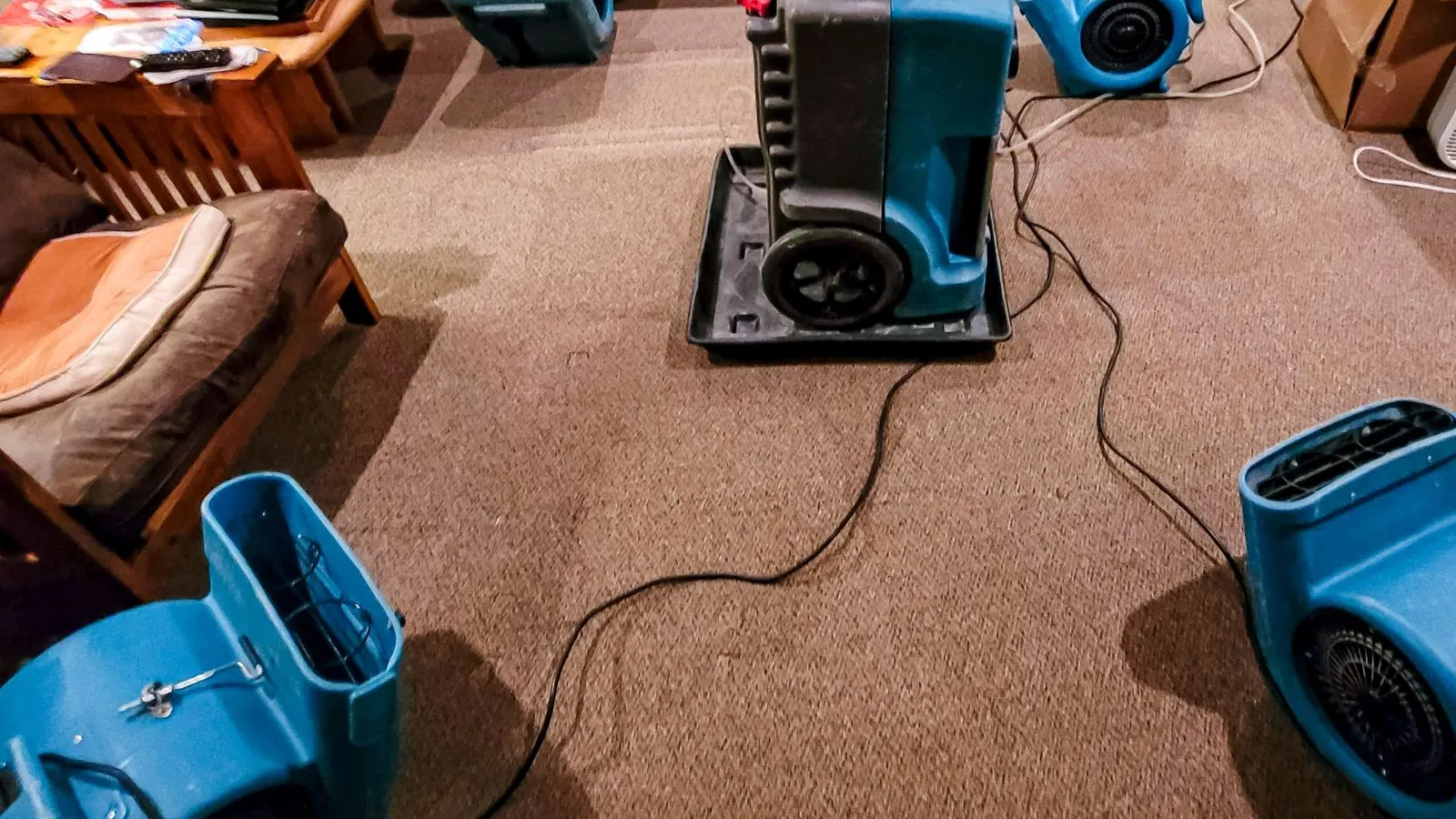
Structural drying and dehumidification is the controlled drying of walls, floors, ceilings and framing after water has been removed. It uses air movers, dehumidifiers and moisture meters to bring wet materials back to a dry standard. It is the step that stops mold and rot, and skipping or rushing it is the most common reason a water loss comes back.
Our 24/7 line at (630) 580-6401 is open, and same-day response is available when crews are free. If water is still on the floor, start with water extraction. This page is for what comes next.
Why is the wall still damp after the water is gone?
A surface that looks dry can be wet inside. Drywall, wood framing, insulation and subfloor absorb water and release it slowly, and a wall can hold moisture for weeks. A musty smell, a swollen baseboard or paint that bubbles days later means water is still in the structure, and structural drying is the fix.
Water mitigation and drying: what the terms mean
Water mitigation is the work done to limit damage after a loss, including stopping the source, extraction and drying. Structural drying is the drying part. It follows the ANSI/IICRC S500 standard, which describes how to measure and dry water-damaged materials. Ask any company whether its crews work to it.
The equipment and what each piece does
| Equipment | What it does | When it is used |
|---|---|---|
| Air movers | Move air across wet surfaces to speed evaporation | Floors, walls and ceilings. |
| LGR dehumidifiers | Pull water vapor out of the air | Most residential jobs. |
| Desiccant dehumidifiers | Dry very cold or very humid spaces | Cold basements and large losses. |
| Moisture meters | Read moisture in wood, drywall and concrete | Every visit. |
| Thermal imaging | Shows cool, wet areas behind surfaces | Finding hidden water. |
| Injection drying systems | Push dry air into wall cavities | Walls that should be saved. |
How moisture mapping works
Before equipment goes in, we map the wet area with meters and a thermal camera and record readings on a sketch. That tells us where to place air movers and where to open a wall. We return and take readings each day, so equipment is adjusted and removed only when readings reach the dry standard, not on a calendar.
Drying goals are set by comparing wet materials against dry reference readings from unaffected parts of the building. That is why two houses with the same flood may dry in different numbers of days.
A typical drying job step by step
Map
Meters and thermal imaging define the wet area and set a baseline.
Set equipment
Air movers and dehumidifiers go in and the room is closed to control humidity.
Monitor daily
We take readings, move equipment and watch the humidity inside the space.
Verify dry
Equipment comes out only when readings match the dry standard.
Seasons and your house
Illinois summers are humid, so opening windows to dry a wet room can add moisture. In winter, cold surfaces and low air movement slow drying, and a basement can stay cold and damp. We control the space, so the process works in either season.
If you are drying a small area yourself, keep the room closed, run a dehumidifier and check with a moisture meter. For anything larger or older than a day or two, call us.
When drying meets other pages
Drying looks different depending on the material. Hardwood floors need controlled drying to limit cupping, carpet and pad often come out, and walls and drywall may be opened. If the wet area is in an attic or ceiling, see ceiling water damage repair.
Safety steps before help arrives
- Turn off power to wet areas only if you can reach the panel safely.
- Stay away from water that came from drains or toilets.
- Lift valuables and electronics to dry rooms.
- Call (630) 580-6401 and tell us what the water touched.
What drives the cost of structural drying
| Cost factor | Why it changes the scope |
|---|---|
| Square footage and volume | More wet area and more cubic feet need more equipment. |
| Materials | Dense materials like hardwood and concrete dry slowly. |
| Number of drying days | Equipment is billed by the day it runs. |
| Water category | Category 2 and 3 water remove more materials before drying. |
| Cold or humid conditions | These slow drying and may require desiccant equipment. |
Many Illinois policies cover the cost of drying after sudden water damage. Read your policy or ask your agent. We explain the scope and price before work starts, and (630) 580-6401 is the number for your real figure.
Common questionsQuestions about drying in West Chicago
The surface can dry while the inside stays wet. A moisture meter reads inside the wall. A musty smell means moisture is still present.
Often a few days, but it depends on materials, humidity and the size of the loss. We measure each day instead of promising a number.
For a small, clean spill, maybe. For anything larger or older, consumer fans cannot control humidity or reach inside walls.
Only when readings show it is needed. Injection drying can save a wall in some cases, and we explain the choice before work starts.
It is the work done to stop and limit damage after a water loss, including extraction and drying. It is the first stage of restoration.
Wet walls or floors?
Call (630) 580-6401 and tell us what you see.