
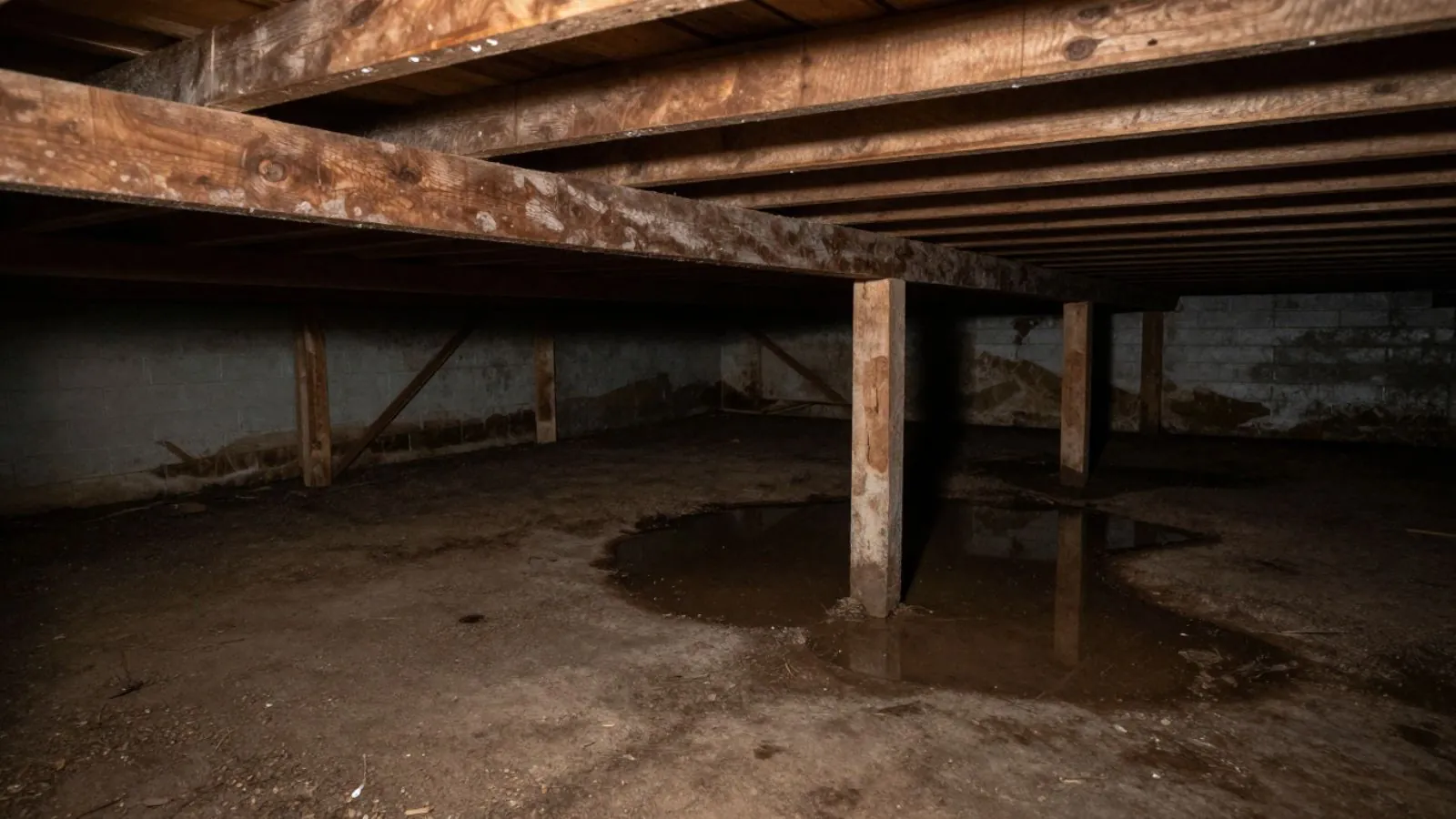
Crawl space water damage is the wet insulation, soaked joists and damp air that follow a leak or a high water table in the void under a floor. Our 24/7 line at (630) 580-6401 is open, and same-day response is available when crews are free. If water is standing in a crawl space, shut off the plumbing source if you know it, stay out of the space if wiring is wet and call us before anyone crawls in.
Crawl space water damage cleanup removes the water, takes out wet insulation and debris, dries the joists and subfloor and checks the space for mold. It is a cleanup and drying job. We do not install encapsulation, so we say when your crawl space needs one.
Why crawl spaces hold water
A plumbing leak above
Supply and drain lines run through the void, and a leak drips onto the dirt or the insulation.
Groundwater and rain
Water can seep in through vents, walls and the dirt floor after heavy rain.
A failed vapor barrier
Missing or torn plastic lets ground moisture rise into the air under the house.
Poor drainage at the foundation
Gutters and grading that send water toward the house can fill the void.
Condensation
Warm, humid air meeting a cool surface leaves water on pipes and ducts.
Local ground conditions worth knowing
The West Chicago Prairie preserve includes wet prairie and freshwater marsh communities, according to the Illinois Nature Preserves Commission. That tells you the area has seasonally high groundwater in places. If your house sits on low ground and has a crawl space, check it after spring rain.
Look for standing water, damp insulation hanging from the floor above and a musty odor in the rooms over the space. Those are early signs that moisture is getting in.
What cleanup involves
Make it safe
We check wiring, access and air quality before anyone enters the space.
Remove the water
Submersible pumps and wet vacuums clear standing water. See water extraction.
Take out the wet materials
Saturated insulation, debris and damaged vapor barrier are removed.
Dry and verify
Air movers and dehumidifiers run until meters read dry in the joists and subfloor.
Mold, odor and the floor above
A damp crawl space often becomes a mold problem because the air is still, the wood is organic and the moisture stays. Odor travels up through floors, so a musty smell in the living room can start under it. If growth is present, mold remediation comes first, with containment.
Warped hardwood, soft spots and cupping above a crawl space are signs of long-term moisture. See hardwood floor water damage for what happens next.
What we do not do
We do not install encapsulation, French drains, sump systems or insulation. If your crawl space needs any of those, we tell you honestly and suggest you get a foundation or crawl space specialist before the rebuild. Fixing the cause matters, because drying a space that will flood again is wasted money.
Ventilation, vapor barriers and what happens after drying
After standing water is gone, the crawl space still needs air movement and a plan to keep the ground from wetting the joists again. A torn or missing vapor barrier lets soil moisture rise straight into the floor system. We note what we find so you can decide on repairs.
Insulation hung between the joists often absorbs water and sags. Wet fiberglass loses its value and holds moisture against the subfloor, so it is usually removed and replaced.
Safety steps before help arrives
- Stay out of standing water in basements and crawl spaces until power is off.
- Do not use electrical devices in wet areas.
- Keep children and pets away from the water.
- Document the water level with photos and call (630) 580-6401.
For crawl space water damage, our water categories, drying goals and documentation follow ANSI/IICRC S500, the published standard for professional water damage restoration.
What drives the cost of crawl space cleanup
| Cost factor | Why it changes the scope |
|---|---|
| Standing water or damp only | Standing water needs pumping before drying starts. |
| Access and clearance | Tight spaces take more labor and time. |
| Insulation and debris | Wet insulation must be removed and later replaced. |
| Mold present | Growth adds containment and removal. |
| Drying days | Cool, damp spaces dry slowly. |
Many Illinois homeowners policies cover sudden water damage like a burst pipe but not groundwater or gradual moisture. Read your policy or ask your agent. We explain the scope and price before work starts, and (630) 580-6401 is the number for your real figure.
Common questionsQuestions about crawl space water damage cleanup in West Chicago
Yes. We remove water, take out wet insulation, dry the joists and check for mold. We do not install encapsulation or drainage.
If water is standing or still coming in, yes. Our line is open 24/7, and same-day response is available when crews are free.
A musty smell upstairs, sagging insulation, damp wood, condensation on pipes and warped floors above are common signs.
Only if the source is fixed. If groundwater or drainage caused it, a specialist should address that.
Water under the house?
Call (630) 580-6401 and tell us what you see.