
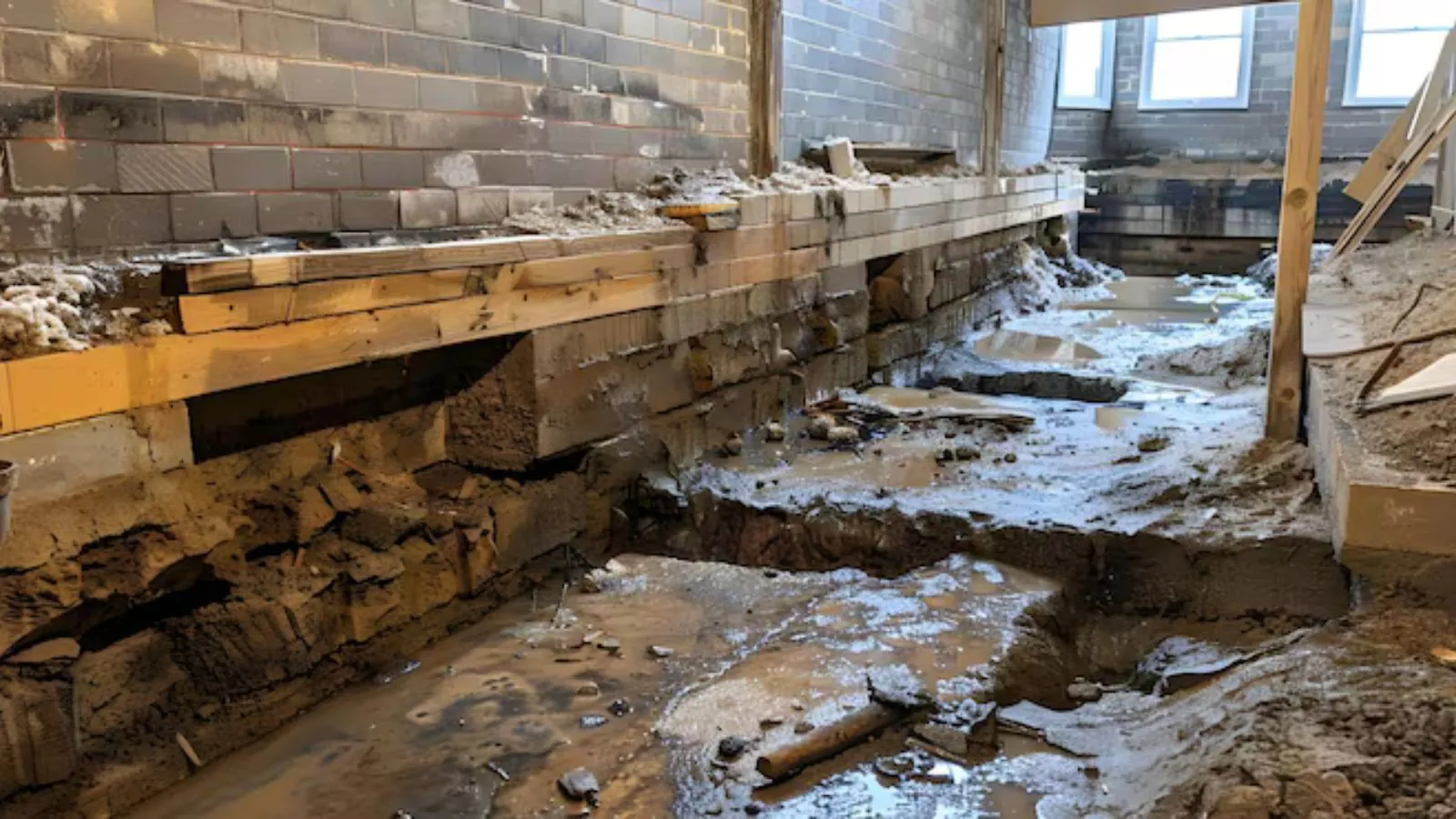
Standing water is an emergency because every hour it sits, it soaks deeper into drywall, subfloor and carpet padding. Our line at (630) 580-6401 is answered 24/7, and while you wait you can stop the source, shut off the main water valve, lift valuables onto dry surfaces and keep people and pets out of the water. If the water has reached an outlet, a power strip or the electrical panel, stay out and call 911 or the utility first.
Water extraction is the physical removal of standing water from floors, carpet and low spaces with submersible pumps, wet vacuums and truck-mounted or portable extraction units. It is the first step of water damage restoration in West Chicago, IL, and it comes before drying, because a dehumidifier cannot pull an inch of water off a basement floor.
Act firstWhen standing water is an emergency
Water deeper than an inch
Pumps work better the sooner they start. Water this deep is already moving into baseboards, door jambs and the bottom of the wall cavity.
Water spreading to carpet or drywall
Wet carpet padding holds water like a sponge, and drywall wicks it several inches above the waterline within hours.
Water that did not come from a clean supply
Water from a toilet, floor drain or outside the building needs a different plan. See sewage backup cleanup before you touch anything.
Water near electrical equipment
Outlets, panels, furnaces and sump pumps change the safety plan. Do not wade in until power is off at a dry panel or the utility says it is safe.
What kind of water is it?
West Chicago pulls its drinking water from nine city wells in two geologic formations, so a failed supply line in a West Chicago house starts as clean Category 1 water. That is the best case, and it does not last. Water that sits for a day or more, or runs across a dirty floor, drifts toward Category 2, and the plan changes with it.
Knowing the category before extraction decides what gets pumped, what gets cut out and what gets treated. We check it on arrival and explain it before work starts.
| Water category | Typical source | What it means for extraction |
|---|---|---|
| Category 1 | Supply line, faucet or tank failure | Extract, dry and save most materials if the water has not aged. |
| Category 2 | Dishwasher or washing machine discharge, aged clean water | Extract, then remove padding and some porous materials. |
| Category 3 | Sewage, rising flood water, river water | Extract with protective gear, then remove and dispose of affected porous materials. |
Categories follow the published ANSI/IICRC S500 water damage standard. Ask any company whether its crews work to it.
How extraction works, step by step
Stop and survey
We find the source, confirm the main is off and walk the area with a moisture meter to see how far the water has traveled.
Pump the bulk
Submersible pumps drop the standing water first, then extraction units clear what is left on the surface.
Extract from soft goods
Weighted wands pull water out of carpet and padding. Padding that cannot be saved is lifted out.
Hand off to drying
Wet materials are mapped so structural drying and dehumidification can start the same visit when available.
The equipment we bring
Small spills get wet vacuums. A basement with several inches of water gets a submersible pump and a hose run to a safe discharge point, often a floor drain or the yard away from the foundation. Larger floors get a truck-mounted or portable extraction unit that moves far more water than a shop vacuum.
A weighted extraction wand makes the biggest difference on carpet. It pulls water out of the pad underneath, which is the part that stays wet for weeks if it is only blotted from the top.
Before the pump goes in, we check what the water is touching. Ranges, furnaces, water heaters and outlets sit low in a lot of utility rooms, and none of them belong in a work zone until they are made safe.
Why speed matters here
O'Hare's 1991 to 2020 normal is 37.86 inches of precipitation a year, enough that a basement sump pump in a low part of West Chicago can run for much of spring. A pump that stops during one hard storm turns a damp basement into a flooded one. Test yours with a bucket of water before April, and call us the minute it fails.
Mold can begin to grow on wet materials within about 24 to 48 hours, which is why the hours right after the leak matter more than any other part of the job. Mold remediation is a separate and larger project that early extraction often avoids.
What not to do before we arrive
- Do not run a household vacuum or a box fan through standing water.
- Do not open walls or pull up flooring until the water category is known.
- Do not step into water if a cord, outlet or panel is wet.
- Do not throw out damaged items before you photograph them for your insurance records.
Water on the floor right now?
Tell us where it is coming from and how deep it is. Same-day response is available when crews are free.
What drives the cost of extraction
Every house is different, so we do not quote from a table. We explain the scope and the price before work starts, and these are the things that move it.
| Cost factor | Why it changes the scope |
|---|---|
| Water category | Category 2 and 3 water add protective gear, disposal and more material removal. |
| Square footage affected | More floor area means more extraction time and more drying equipment later. |
| Materials involved | Carpet, padding, laminate and wood hold and release water differently. |
| Hours since the leak | Older water spreads further and is more likely to need removal, not drying. |
| What follows extraction | Drying days and equipment usually cost more than the extraction itself. |
Most Illinois homeowners policies cover sudden and accidental water damage but not slow leaks, and flood or sewer backup usually needs added coverage. Read your policy or ask your agent. Want your real number? Call (630) 580-6401.
Extraction after a flood, a storm or a sewer problem
When the water came from outside, the job starts the same way but ends differently. Flood damage cleanup covers river and groundwater events, and basement water damage covers the below-grade rooms where most extraction in this area happens. A toilet or drain overflow belongs with sewage cleanup, not with this page.
If the water came up from the ground in Winfield or Carol Stream, our Winfield and Carol Stream pages explain how we cover those towns from West Chicago.
A note on shutting off water in West Chicago
City Public Works controls the main in the street, but the shutoff that matters to you is on your own line, usually where the pipe enters the house near the meter. Find it before you need it. If you cannot close it or the leak is at the curb, call the city's Public Works Department and then call us.
Common questionsQuestions about emergency water extraction in West Chicago
Yes. Our line is open 24/7, including nights, weekends and holidays. Call, describe the water and where it is coming from, and we will get a crew moving as soon as one is free. Same-day response is available when crews are free, and we explain the scope and price before work starts.
It depends on how much water there is and how large the space is. A small kitchen spill can be extracted in under an hour. A basement with several inches of water takes longer. We give you an honest read on arrival instead of a promise made over the phone.
For a small clean spill, yes. For anything deeper than a shallow puddle, or any water near electrical gear, no. A shop vacuum does not reach the water inside padding and walls, which is where mold starts.
No. Extraction removes standing water. The water absorbed by drywall, subfloor and framing still has to be dried and measured with moisture meters before anything is rebuilt.
Yes. Category 3 water means protective gear, more material removal and safe disposal. We confirm the category on arrival and explain the scope and price before any work begins.
Ready to start pumping?
Call (630) 580-6401 and describe the water. We explain the scope and price before work starts.