
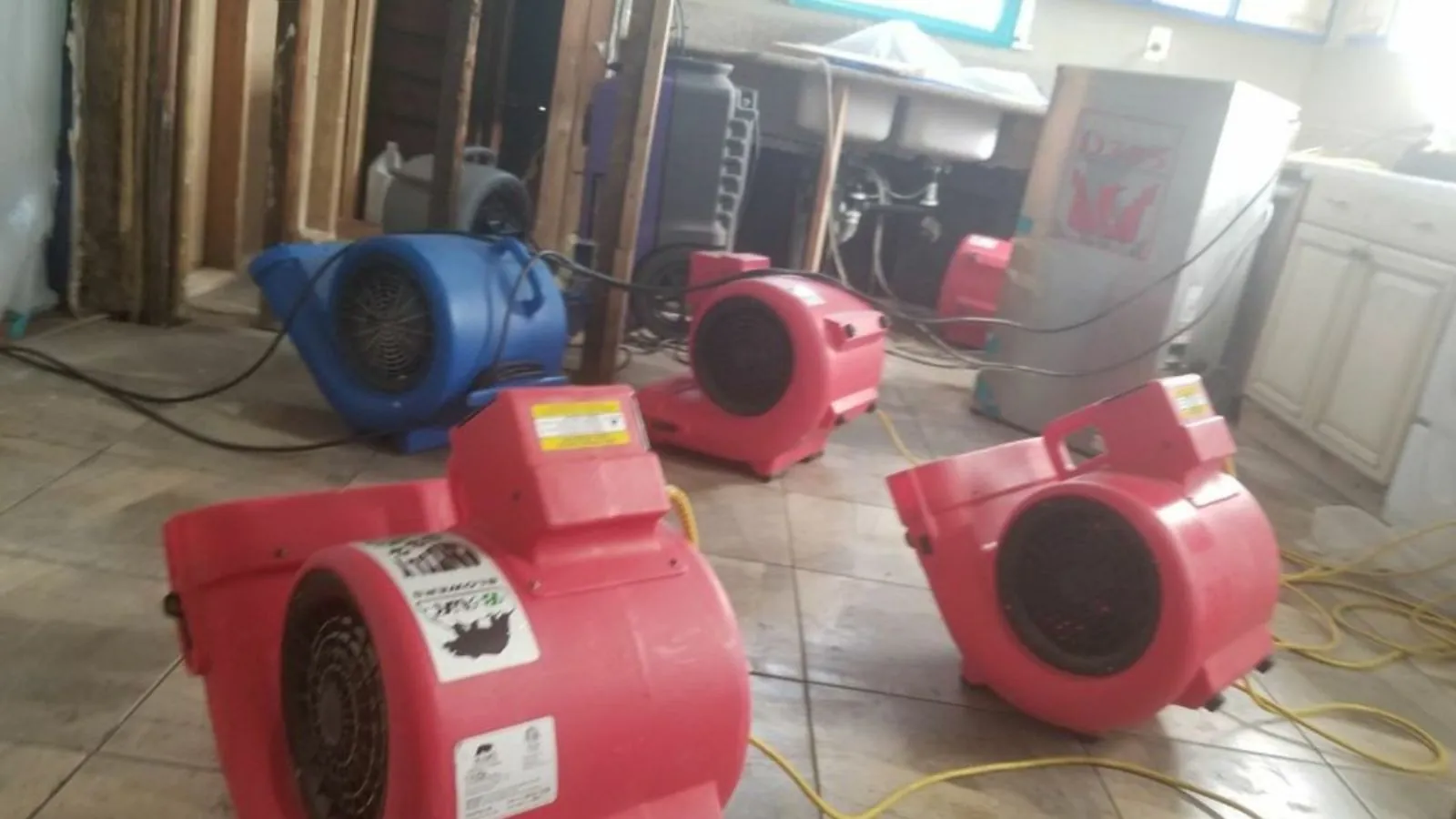
Wall and drywall water damage repair covers wet drywall, baseboards and insulation and the framing behind them. Drywall wicks water several inches above the waterline, so a puddle on the floor can mean a wet wall to knee height. Call us at (630) 580-6401 if you see bubbling paint, a soft wall or swollen baseboards, and same-day response is available when crews are free.
The goal is to dry what can be dried in place and cut out what cannot, so the wall can be rebuilt on dry framing.
Signs water is in the wall
Bubbling or peeling paint
Moisture pushes paint off drywall from behind.
Soft or crumbling drywall
Wet gypsum loses strength and can crumble at the base.
Swollen or lifting baseboards
Baseboard absorbs water and swells.
Stains that return
A stain that comes back after painting means the source is still active.
A musty smell
Wet insulation and paper facing hold odor.
Dry in place or cut it out?
If the water was clean, the drywall is not sagging and it was caught quickly, drying in place is often possible. Drywall that is soft, crumbling, stained by Category 2 or 3 water or wet for days is usually removed. The usual practice is a flood cut at a set height above the visible waterline.
We use a moisture meter and a thermal camera to find the real extent. Cutting too little leaves wet insulation, and cutting too much costs more to rebuild.
How a wet wall is handled
Find the wet area
Meters and thermal imaging map moisture behind the surface.
Open the wall
Baseboards come off. Drywall is cut where needed so the cavity can be inspected.
Remove wet insulation
Insulation that is wet is removed. It does not dry reliably inside a wall.
Dry and verify
Air movers, dehumidifiers and sometimes injection drying run until readings match the dry standard.
Older homes and what to test first
Homes built before 1978 may have lead-based paint, and federal rules require lead-safe work practices for contractors disturbing painted surfaces in those homes. Older plaster, joint compound and textured finishes can also contain materials that should be tested before they are cut or sanded.
Ask any contractor, including us, how they handle testing for older materials. West Chicago has historic districts and older neighborhoods, so this comes up.
Repair after drying
Once the wall is dry, a drywall contractor patches, tapes, mudded, primes and paints. Matching a texture or paint color takes more time than hanging the board. Do not seal or paint a wall that has not been confirmed dry, because trapped moisture will return as staining or mold.
If the source was a ceiling above, see ceiling water damage repair. If it came from a pipe, see burst pipe water damage.
Mold and walls
A wall that stayed wet for a few days can grow mold on the back of drywall and on framing. If you see dark spots or smell mustiness, stop and read mold remediation. Opening a moldy wall without containment can spread spores through the house.
Opening a wall without making a mess
Small inspection holes let us put a camera or moisture probe into a cavity before we cut. If the wall is wet, a flood cut removes the bottom strip of drywall at a clean height so the insulation and framing can dry. Cutting in a straight line makes the repair patch easier and neater.
We protect floors, pull outlet covers, and mark the cut line with a level. Dust control matters, so cutting is done with a vacuum attachment where possible.
For wall and drywall water damage, our water categories, drying goals and documentation follow ANSI/IICRC S500, the published standard for professional water damage restoration.
What drives the cost of wall and drywall repair
| Cost factor | Why it changes the scope |
|---|---|
| Water category | Category 2 and 3 water means removal, not drying. |
| Wall height and length | More wall area means more cutting and drying. |
| Insulation | Wet insulation is removed and replaced. |
| Finish | Texture, paint and trim matching add rebuild cost. |
| Drying days | Wall cavities dry slowly. |
Many Illinois homeowners policies cover sudden water damage to walls but not gradual seepage. Read your policy or ask your agent. We explain the scope and price before work starts, and (630) 580-6401 is the number for your real figure.
Common questionsQuestions about wall and drywall water damage repair in West Chicago
Sometimes, if it was clean water and caught early. Soft, crumbling or contaminated drywall has to come out.
Often several inches above the visible waterline, which is why flood cuts go above it.
We dry and remove. A drywall contractor patches and paints. We coordinate timing.
If it is dry and not growing, it is cosmetic. If it is damp or new, find the source.
Wet wall?
Call (630) 580-6401 and tell us what you see.