
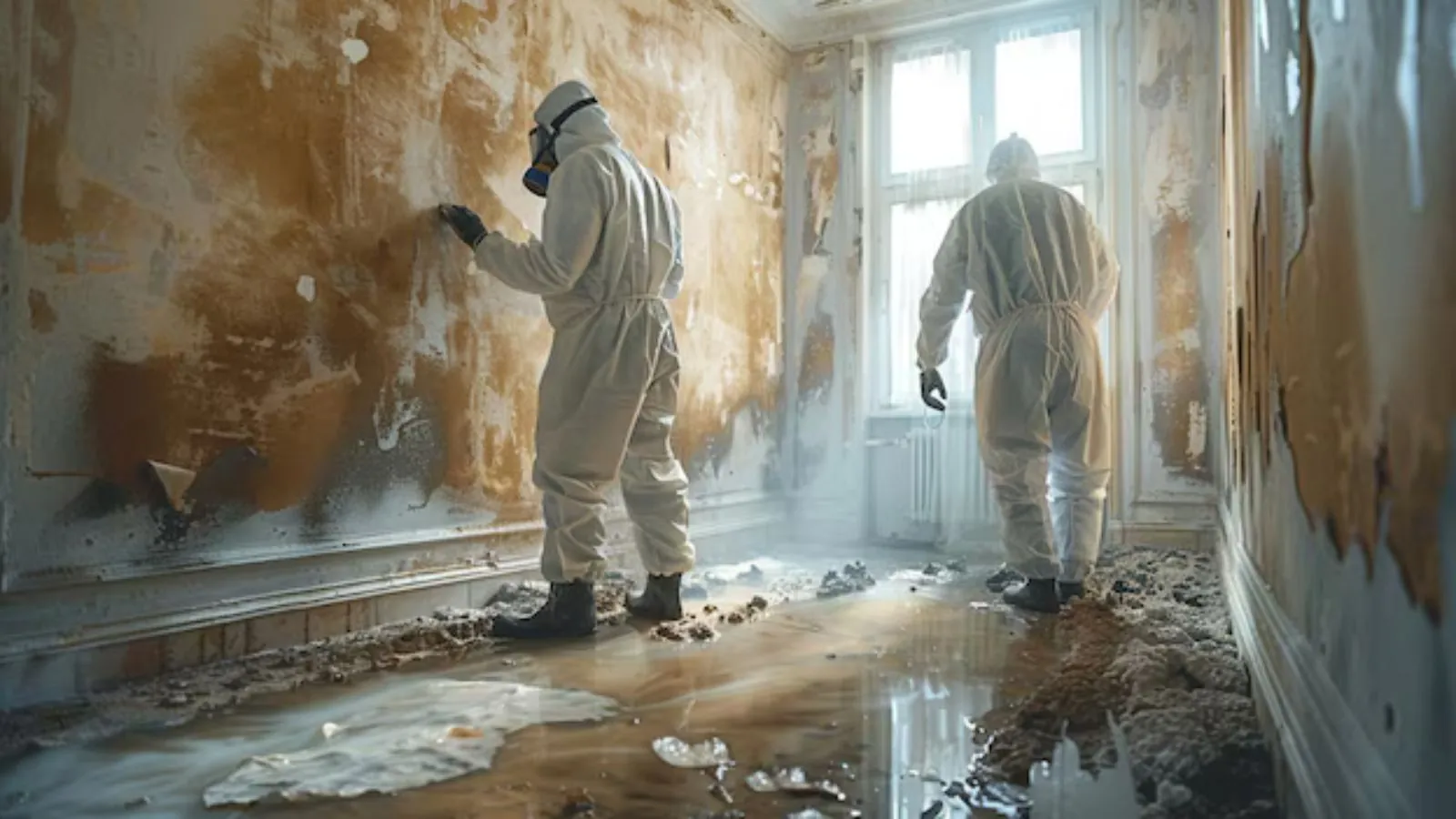
Can you clean mold in a basement yourself? Sometimes, if the area is small and the material is hard. The EPA's homeowner guidance says that if the moldy area is less than about 10 square feet, roughly a 3 foot by 3 foot patch, you can usually handle it yourself. Larger areas, porous materials and sewage-related water are different.
This guide is about surfaces, what can be cleaned, what has to go, and how to do the small job safely. It is not medical advice. For health questions, talk to your doctor.
What can be cleaned and what cannot
| Material | Usually | Why |
|---|---|---|
| Poured concrete and block | Clean and dry | Hard and nonporous on the surface. |
| Metal, glass and sealed tile | Clean and dry | Growth sits on the surface. |
| Sealed or finished wood | Often clean and dry | Depends on how deep the growth goes. |
| Drywall and plaster | Remove if moldy | Growth goes inside and behind. |
| Carpet and pad | Remove if moldy | Cannot be cleaned in place. |
| Insulation and cardboard | Remove | Porous and hold moisture. |
How to clean a small patch of mold on a hard surface
Fix the water first
Stop the leak or the seepage. Cleaning without fixing moisture means the mold returns.
Protect yourself
Wear an N95 respirator, gloves and goggles, and keep a window or fan going.
Wipe, do not scrub dry
Use detergent and water on a damp cloth. Dry brushing sends spores into the air.
Dry completely
Dry the surface fully with a fan and a dehumidifier before you paint or store anything.
What not to do
- Never mix bleach with ammonia or other cleaners. The fumes are dangerous.
- Do not paint over mold. It grows through paint.
- Do not run the furnace or air handler if you think mold is in the ductwork.
- Do not scrub dry mold with a brush or a household vacuum without a HEPA filter.
When to stop and call for help
Call when the area is larger than about 10 square feet, when growth is inside a wall or under flooring, when water was sewage or flood water, or when mold keeps coming back. Those jobs need containment so spores do not spread to clean rooms. Our mold remediation page explains how containment and removal are done.
The moisture side of the job
Clean mold on a basement wall and you have fixed the symptom. The cause is usually water, whether from seepage, a leaking pipe or condensation. See basement water damage cleanup for what we do after water gets into a below-grade room.
Why West Chicago basements stay damp
O'Hare's 1991 to 2020 normal precipitation is 37.86 inches a year, according to NOAA. That is enough for spring seepage and humid summers to keep an unfinished basement damp for months. A hygrometer costs little and tells you whether the room is staying under the EPA's recommended 60 percent humidity.
Know what you are cleaning
Not every dark spot in a basement is mold. Efflorescence is a white, chalky mineral deposit left when water passes through masonry, and it wipes away. Dirt, soot and old stains can look similar to growth from a distance.
If you are unsure, wipe a small area with a damp cloth. Mineral deposits dissolve and mold smears or leaves a stain. Either way, the cause is moisture, so look for where the water is coming from.
Surfaces and what usually works
| Surface | Typical approach |
|---|---|
| Painted concrete block | Scrub with detergent and water, rinse, dry fully. |
| Bare concrete floor | Scrub and dry, then fix humidity. |
| Finished drywall | Small spots may be cleaned, larger or soaked areas are removed. |
| Carpet and pad | Wet carpet pad usually needs to be removed. |
| Wood framing | Surface growth may be cleaned and dried, deep rot needs a pro. |
| Stored boxes and fabric | Discard cardboard, wash or discard textiles. |
Matches general EPA guidance for small areas.
Dry the room after cleaning
Cleaning without drying only buys time. Run a dehumidifier with a continuous drain and an air mover until the humidity stays in the 30 to 50 percent range. Check again after a rainy week, since basements often rebound.
If the humidity will not come down, a source is still feeding the room. Our basement water damage cleanup page covers how we find and dry that source.
Protect yourself while cleaning
Wear gloves, eye protection and a respirator rated for fine dust or spores, and ventilate the area. Keep the work area closed off from the rest of the house with plastic sheeting if you can. Never mix bleach with ammonia or other cleaners.
Bag debris before carrying it through the house. Wet cleaning keeps dust down better than dry scrubbing. Wash your clothes separately when you are done.
Mistakes that make a basement worse
- Painting over growth without cleaning and drying it first.
- Running a fan across a wet wall and calling it dry.
- Storing boxes against exterior walls.
- Skipping the gutters and grading outside.
- Using the basement as a drying room for laundry.
If the basement has taken water, not just humidity, start with water extraction and drying before you clean any growth.
Where this guide uses restoration terms such as water categories and drying goals, they come from ANSI/IICRC S500, the published standard for professional water damage restoration.
After the cleaning
Keep humidity under control and watch the spot for several weeks. A stain that stays dark after cleaning may mean the surface is clean but discolored, and a spot that spreads means moisture is still present. If you live in Winfield or Bartlett, see our Winfield and Bartlett pages. Call (630) 580-6401 if you want an assessment.
Common questionsQuestions about this topic in West Chicago
The EPA guidance for homeowners suggests that areas under about 10 square feet can usually be handled yourself, while larger areas or large water losses may call for a professional.
Detergent and water are usually enough to clean a hard surface. The bigger job is drying and fixing the moisture source.
If mold is on drywall, it usually has to be cut out. Wiping the surface does not reach growth behind the paint.
Because the moisture is still there. Seepage, humidity or a small leak keeps the surface damp, and mold returns when it is cleaned but not dried.