
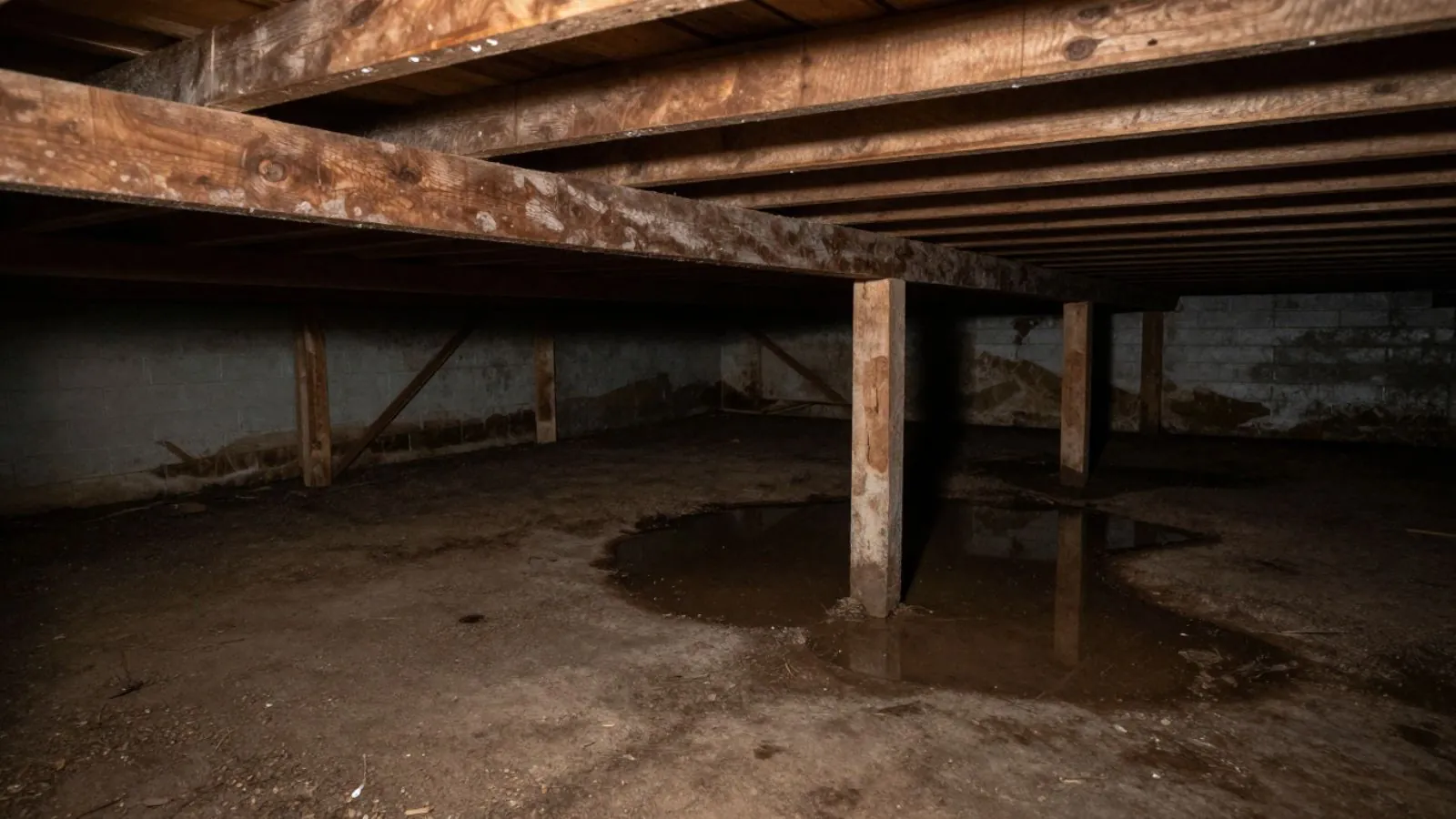
People search for how to kill basement mold, and the honest answer is that killing it is not the goal. Removing it and fixing the moisture is. A spray can change the color of a spot and leave the material and the cause untouched. This guide explains why, and what to do instead.
It is general information, not medical advice. Questions about health and mold belong with your doctor.
Why spraying is not enough
Mold on a hard surface sits on top. Mold on drywall, wood or carpet grows into the material. A surface treatment cannot reach growth inside, and it does nothing about the water that fed it.
The EPA's guidance says that if you clean up mold but do not fix the water problem, the mold will most likely return. That is the reason professionals start with the moisture.
Three approaches compared
| Approach | What it does | Limit |
|---|---|---|
| Surface spray or cleaner | Cleans or lightens surface growth | Does not reach inside porous materials or fix moisture. |
| Removal of affected material | Takes out growth that cannot be cleaned | Needs containment on larger areas. |
| Moisture control and drying | Removes the condition mold needs | Does not remove growth that already exists. |
What actually works
Stop the water
Find and fix the leak, seepage or condensation.
Remove what cannot be cleaned
Cut out and bag moldy drywall, carpet and insulation.
Clean hard surfaces
Use detergent and water, HEPA vacuuming and damp wiping.
Dry and monitor
Dry the structure and keep humidity under control afterward.
Why bleach is not the answer
Bleach can lighten stains on hard surfaces, but it is not a substitute for removal and drying. It does not penetrate porous materials, and the water it carries can add moisture. The EPA's guidance also says that routine biocide use is not a requirement for mold cleanup. If you use any cleaner, read the label, ventilate and never mix products.
What West Chicago homeowners should know
Illinois has a mold remediation registration law
The Mold Remediation Registration Act took effect January 1, 2025, and is administered by the Illinois Department of Public Health. Rules can change, so if you hire a company for mold remediation, ask whether it meets current state requirements and what its process is.
What killing mold actually means
People search for how to kill basement mold, but the goal is to remove it and keep it from returning. Dead mold can still cause staining and odor, and it is removed physically. Cleaning and drying do the work, and chemicals are secondary.
The EPA does not recommend routine biocide use for mold in buildings, and it warns against mixing cleaning products. Detergent and water on hard surfaces is the usual advice for small areas.
Common products and cautions
| Product | Note |
|---|---|
| Detergent and water | The standard first choice on hard surfaces. |
| Household bleach | Never mix with ammonia or acids, ventilate, and know it does not soak into porous material. |
| Vinegar | Sometimes used, strong odor, not a drying step. |
| Commercial mold sprays | Follow the label, they do not replace drying. |
| Fogging or foggers | Do not treat the source and are not a substitute for removal. |
Read labels, ventilate and never combine products.
Keep it from returning
- Keep humidity below 60 percent and ideally 30 to 50 percent.
- Run a dehumidifier with a drain line in summer.
- Keep gutters clear and downspouts discharging away from the foundation.
- Store items off the floor and away from exterior walls.
- Check the sump pump and test it before storm season.
If the same corner keeps going bad, there is a moisture source. See basement water damage cleanup and structural drying for how we find and dry it.
Why bleach is not the full answer
Bleach can lighten a stain on a hard surface, which makes the problem look solved. It does not soak into drywall, wood or carpet pad, where growth often lives. The remaining moisture feeds the next round.
On porous materials the safe advice is removal, not treatment. A wet ceiling tile, carpet pad or section of drywall with growth is usually thrown away.
When surfaces are hard enough to clean
| Material | Usually cleanable? |
|---|---|
| Sealed concrete | Yes, with detergent and drying. |
| Metal and glass | Yes. |
| Painted block wall | Often, if sound. |
| Unsealed wood framing | Surface growth may be cleaned and dried. |
| Drywall and ceiling tile | Usually removed. |
| Carpet and pad | Usually removed. |
General guidance. Conditions vary.
A professional will contain the area, protect nearby rooms and verify the result. See mold remediation if the growth is large or keeps returning.
A realistic timeline
After a source is fixed and wet material is removed, surfaces usually dry in a few days with a dehumidifier running. Heavy masonry and framing can take longer. Check humidity daily for the first week, then weekly for a month.
If humidity climbs again after a rainy stretch, treat that as a signal. Look for new seepage, a gutter overflow or a pump that is not keeping up. Early action costs far less than a second cleanup.
What a professional does differently
A remediation crew sets containment, runs negative air, removes affected material and cleans surfaces with HEPA vacuums and damp wiping. Then they verify the area visually and, where appropriate, through an independent assessor. The aim is removal and prevention, not a chemical fix.
That is also why a one-room patch can often be handled by a homeowner, while a whole basement with soaked drywall should be handled by a crew.
Where this guide uses restoration terms such as water categories and drying goals, they come from ANSI/IICRC S500, the published standard for professional water damage restoration.
When killing is not even the right question
If the growth is large, if the water was sewage or flood water, or if it is in the HVAC system, spraying is the wrong tool. Those jobs need containment and removal. Read our mold remediation page for how that works and structural drying for the drying that follows.
For basements in Winfield or Carol Stream, see Winfield and Carol Stream. Our line is (630) 580-6401.
Common questionsQuestions about this topic in West Chicago
Not by itself. Mold returns when moisture returns. Fix the source and dry the area.
Not over active growth. Paint does not stop mold that is already growing underneath.
Illinois has a remediation registration law effective January 1, 2025, administered by IDPH. Ask any company whether it meets current state requirements.
A dry area with no odor and no visible growth is a good sign. For certainty, an independent assessor can inspect and test.