
Restoration and remediation get used as if they mean the same thing, and the confusion costs people time. They are different jobs with different standards, and one often leads to the other. This guide explains the terms so you can read an estimate and know what you are paying for.
In short, restoration dries and repairs after water damage. Remediation removes a contaminant such as mold under containment.
The four words you will hear
| Term | What it means | Published standard | Example |
|---|---|---|---|
| Mitigation | Stopping the damage from getting worse | ANSI/IICRC S500 | Extracting water and setting drying equipment. |
| Restoration | Drying and returning the building to a safe, dry condition | ANSI/IICRC S500 | Drying walls and floors and removing wet materials. |
| Remediation | Removing contamination such as mold | ANSI/IICRC S520 for mold | Containing and removing mold from a wall. |
| Reconstruction | Rebuilding finishes and structure | Local building codes | Replacing drywall, flooring and trim. |
Why the order matters
Water damage restoration begins with mitigation. Extract the water and dry the structure. If that is done quickly, mold often never starts, and remediation is not needed. If the building stayed wet for more than a day or two, mold can grow, and remediation may come before reconstruction.
Rebuilding comes last. Putting new drywall over wet framing is how a second claim begins.
How a job moves from one stage to the next
Mitigation
Stop the source, extract water and start drying. See water extraction.
Restoration
Remove wet materials that cannot be dried and dry the rest. See structural drying.
Remediation if needed
If mold growth is found, contain and remove it. See mold remediation.
Reconstruction
Repair or replace drywall, floors and finishes once everything is dry.
Why a company may do one and not the other
Some companies handle restoration and mitigation and stop there. Others handle remediation, and some do reconstruction as well. Ask what is included in a quote, because a low price for restoration may not include rebuilding, and a remediation price may not include drying.
Independent testing is also a separate step. An assessor can inspect and sample before and after remediation, and some homeowners prefer that so the company doing the work is not also judging it.
Which one does your situation need?
| Situation | Most likely needs |
|---|---|
| Pipe burst this morning | Mitigation and restoration. |
| Basement flooded last week and still smells musty | Restoration, possibly remediation. |
| Dark growth on drywall after a slow leak | Remediation, then reconstruction. |
| Sewage backup | Category 3 cleanup and restoration. |
| Repainting after drying is complete | Reconstruction. |
What Illinois says about remediation
Illinois adopted the Mold Remediation Registration Act, effective January 1, 2025, administered by the Illinois Department of Public Health. The word remediation matters here because the registration law applies to mold remediation work. Rules can change, so ask any company whether it meets current state requirements before you sign.
Reconstruction and permits
Dry-out work usually does not need a permit, but rebuilding often does when electrical, plumbing or structural work is involved. The City of West Chicago has a Building Division that handles permits and inspections, and the rules for Winfield, Carol Stream and Bartlett belong to those villages. Ask before you hire a contractor for the rebuild.
Our Winfield and Bartlett pages note that the authority changes with the address.
Why the wrong word can cost you
A homeowner who asks for remediation when they need restoration may pay for containment and testing that the job does not call for. A homeowner who hires a restoration crew for a mold problem may find that drying alone did not remove the growth. Using the right word at the start saves a second visit.
Describe what you see instead of using a label. Say that water came in two days ago, or that you have dark growth on a wall, and let the company explain which category applies.
Standards in plain words
ANSI/IICRC S500 is a published standard for professional water damage restoration. It describes categories of water and classes of loss, and it guides drying goals. ANSI/IICRC S520 is a published standard for professional mold remediation. It describes conditions, containment and verification.
Neither document is a license, and neither replaces your local rules. They are references that professionals use, and a good company can tell you which one applies to your job.
Verification at the end
Restoration ends with dry readings. Remediation ends with a visual check and sometimes a post-remediation assessment by someone independent. Ask what proves the job is finished before you agree to start. See also mold remediation and structural drying.
A quick example
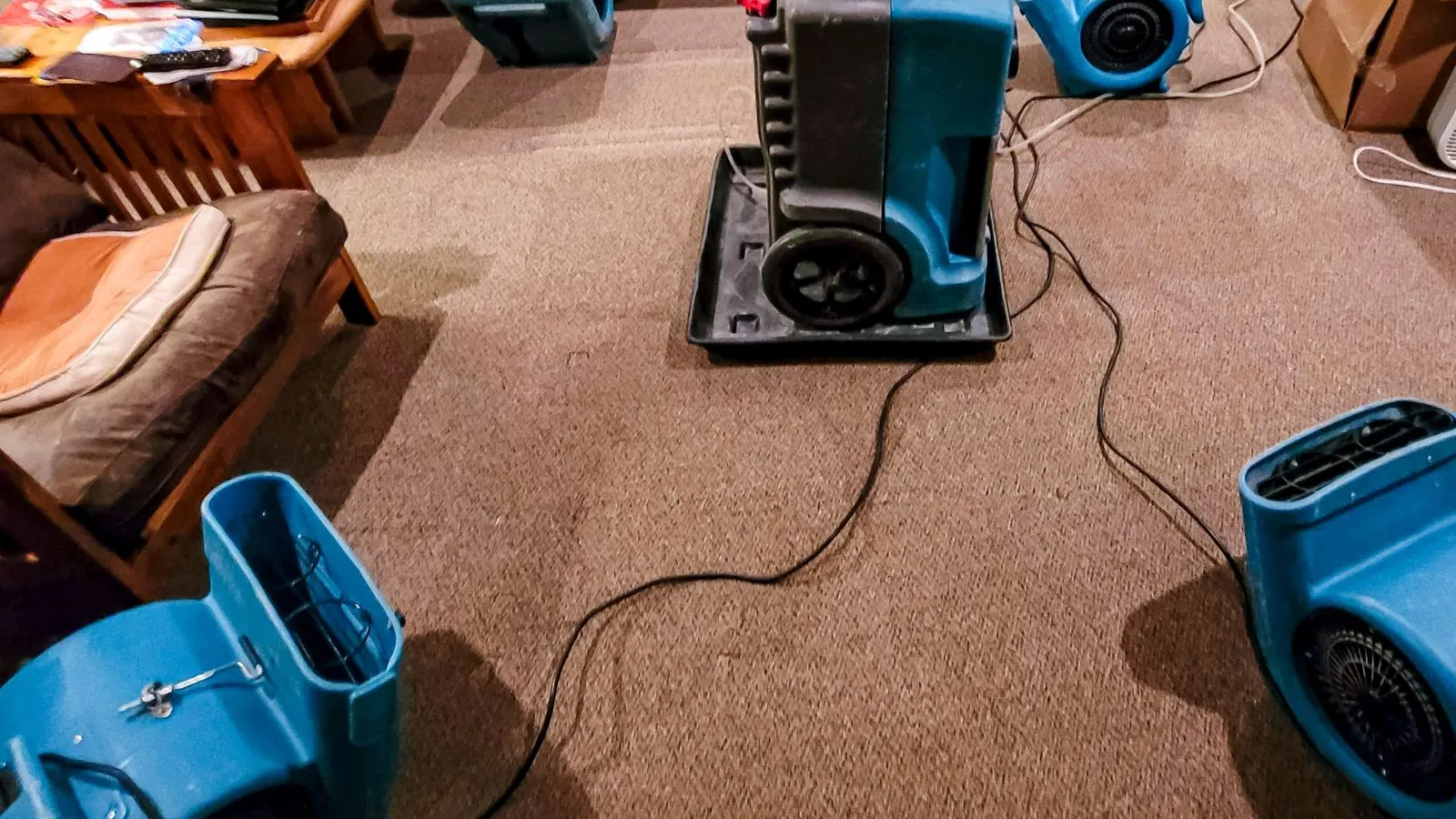
A washing machine hose bursts on a Saturday. Water spreads through a finished basement over several hours. A crew extracts it, removes wet carpet pad and drywall, sets drying equipment and takes daily readings. That is restoration.
If the same water had sat for two weeks and dark growth had formed on the back of the drywall, the job would add containment and removal of growth. That is remediation. See appliance leak water damage for the first case.
Reading a company's website
Check whether a company names the standards it works to, explains its process in plain words and lists the services it actually performs. A page that lists restoration, remediation and reconstruction as one package should say which parts are done in house and which are subcontracted.
Our water extraction and flood damage restoration pages list what we do and how.
Questions to ask any company
- Do your crews work to ANSI/IICRC S500 and, for mold, S520?
- What is included in the scope and what is not?
- Who does the rebuilding, and is it priced separately?
- Will you document moisture readings each day?
- Do you meet current Illinois requirements for mold remediation?
We explain the scope and price before work starts. Call (630) 580-6401 to talk through your situation.
Common questionsQuestions about this topic in West Chicago
No. Restoration dries and repairs after water damage. Remediation removes mold growth under containment. A job can need both.
Drying usually does not need one, while rebuilding may. Ask the city's Building Division before electrical, plumbing or structural work.
Moisture readings compared to dry reference materials. A company should show you the numbers.
Often only when mold follows a covered sudden loss. Check your policy, and keep records.