
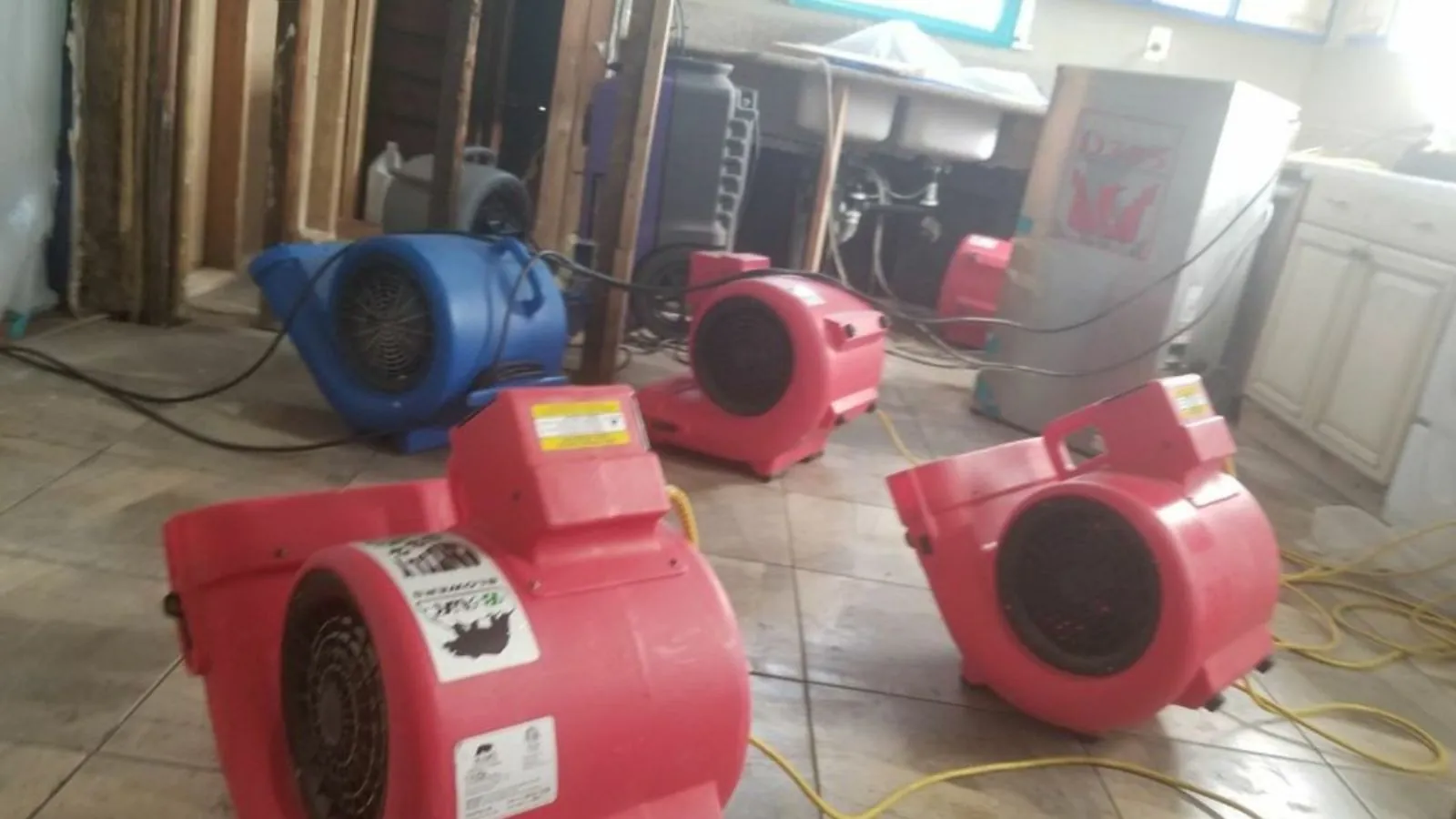
A scope of work is the document that says what will be done to your property and in what order. It is not a price list. It is the plan, and reading it carefully is the best way to catch surprises. This guide explains the terms you will see on a water damage scope in West Chicago, IL.
Ask for the scope in writing before work starts, and read it with the estimate beside it.
The words you will meet
| Term | Plain meaning |
|---|---|
| Demo | Removing damaged materials such as drywall, carpet pad or baseboard. |
| Flood cut | Cutting drywall a set height above the waterline so wet material and insulation can be removed. |
| Containment | Plastic barriers that keep dust and contaminants in the work area. |
| Negative air | A machine that pulls air out of the work area through a filter. |
| Dry-out | The drying period with equipment running. |
| Equipment days | The number of days each piece of equipment runs. |
| R and R | Remove and replace. |
| Contents manipulation | Moving furniture and belongings so work can be done. |
| Antimicrobial treatment | A cleaning product applied to surfaces after removal. |
How a scope is organized
Most scopes go room by room. For each room you should see the affected area, the materials involved, the work to be done and the equipment that will run. Look for a moisture map or a list of readings, since they show why a wall is being cut.
Photographs should be attached or referenced. They show the condition on the day the scope was written.
Questions to ask while reading
- Does each room list the materials and the area?
- Is the water category named?
- Is the number of equipment days stated?
- What happens if drying takes longer?
- Is rebuilding included or not?
- Who approves changes?
Order of work
Stop and extract
Source stopped and standing water removed.
Demolition
Wet materials that cannot be dried come out.
Dry-out
Equipment runs while readings are taken.
Verify and rebuild
Dry readings signed off before rebuild begins.
If your scope jumps straight to rebuild, ask why there is no drying. Our structural drying page explains why that step cannot be skipped.
Comparing a restoration scope with an insurer's scope
Insurers often write their own scope using estimating software. It may use different terms or quantities. Put the two side by side, and ask the adjuster to explain differences. Common gaps are drying days, contents handling and hidden damage found after demolition.
When the scope needs inspections
If any part of your scope needs a permit, such as electrical or plumbing work, the West Chicago Building Division asks that inspections be requested at least 24 hours ahead. Build that lead time into the schedule, and ask your contractor who requests the inspections.
Scopes for common jobs
A basement scope often has more demolition and longer drying, as covered on our basement water damage page. A sewage scope adds containment, protective gear and disposal, as described on sewage backup cleanup. A wall scope is described on wall and drywall water damage repair.
A worked example, a wet kitchen wall
Imagine a supply line failing behind a dishwasher. A scope for that loss might list extraction from the floor, removal of baseboard and the lower section of drywall, drying equipment for several days and a final reading before rebuild. Each of those is a line, and each should have a quantity.
If the scope says only kitchen water damage with a lump sum, ask for the breakdown. A line for cabinets, flooring and trim matters, since those are the places where cost differences hide. See kitchen water damage restoration.
Red flags in a scope
- No water category named.
- No moisture readings or map.
- Equipment listed without days.
- Rebuild lines without quantities.
- Demolition without a reason.
- A clause that allows unlimited changes.
Ask the company to fix those before you sign. A scope that reads clearly is usually a sign of a company that works clearly.
Contents, a line people forget
Moving furniture, boxing belongings and cleaning or discarding damaged items are separate work. Ask whether contents handling is in the scope and who decides what is discarded. Take photos and a list of anything thrown away, since insurers often ask.
Some items can be cleaned, dried or restored, and some cannot. Porous items that touched Category 3 water usually cannot be saved. See sewage backup cleanup for how that category is handled.
Change orders in plain words
A change order is a written agreement to change the scope or price. It should say what is changing, why and what it costs. Do not accept a verbal change on the day, because it is hard to prove later.
A reasonable company will send the change order for your review, and it will make sense once you have seen the photos.
Reading the equipment list
Air movers push dry air across wet surfaces, and dehumidifiers pull moisture out of the air. The list should name both, with counts. Specialty items such as floor drying mats or wall cavity systems may appear for hardwood and wet walls.
Ask how the counts were chosen. Industry guidance sets starting points based on room size and class of loss, and readings then show whether to add or remove equipment. See hardwood floor water damage repair for the special case of wood floors.
Where this guide uses restoration terms such as water categories and drying goals, they come from ANSI/IICRC S500, the published standard for professional water damage restoration.
Keep the scope with your records
Sign nothing you have not read. Keep a copy of the signed scope, the photographs, the moisture readings and every change order. If you live in Bartlett or Carol Stream, our Bartlett and Carol Stream pages explain how we cover those villages. Call (630) 580-6401 if you want help reading a scope.
Common questionsQuestions about this topic in West Chicago
A cut made in drywall a set height above the waterline so wet material can be removed and the cavity can be inspected and dried.
Because drying time drives cost, and the number of days should be tied to readings.
Yes. Ask for the change in writing and ask how it affects the price.
You do, with the help of moisture readings, photographs and the contractor's daily notes.